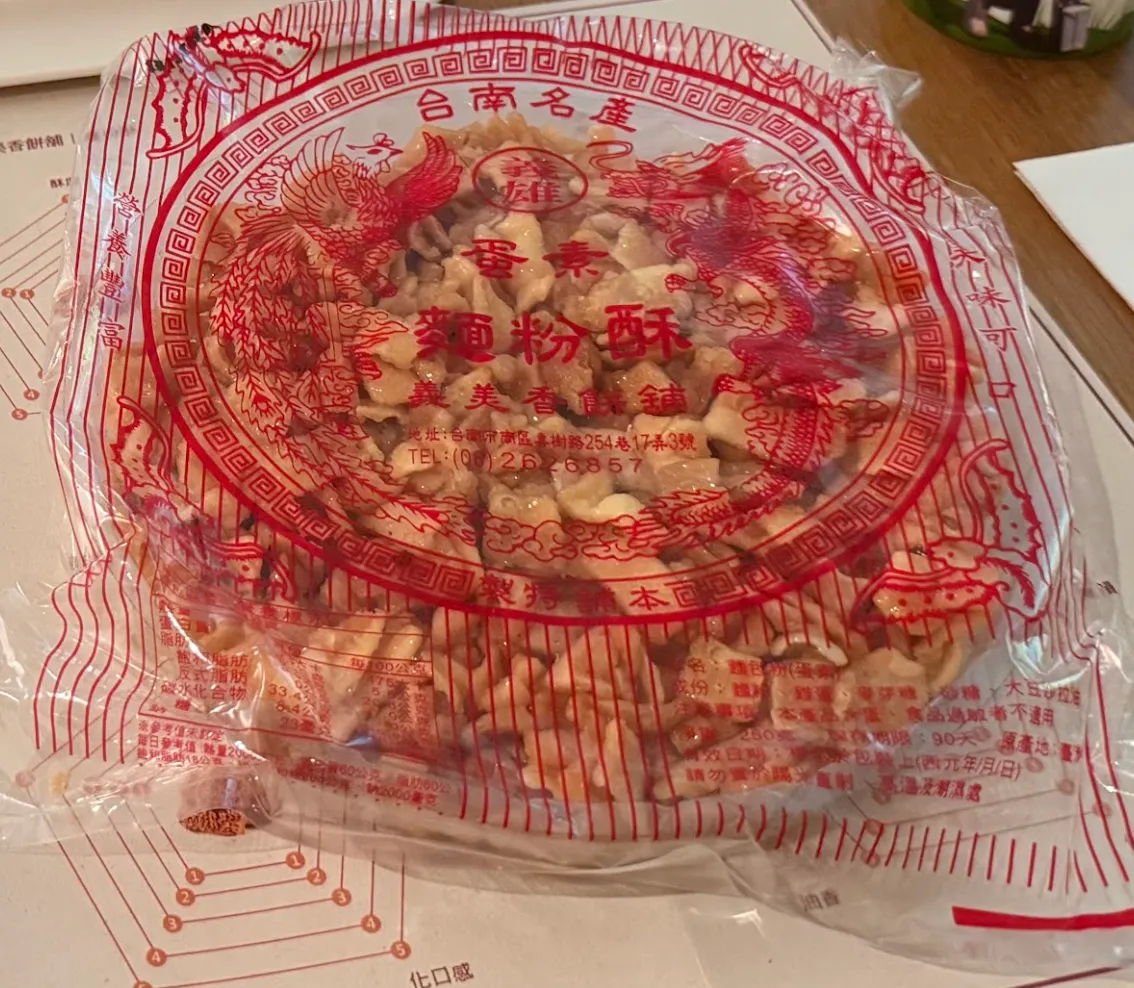
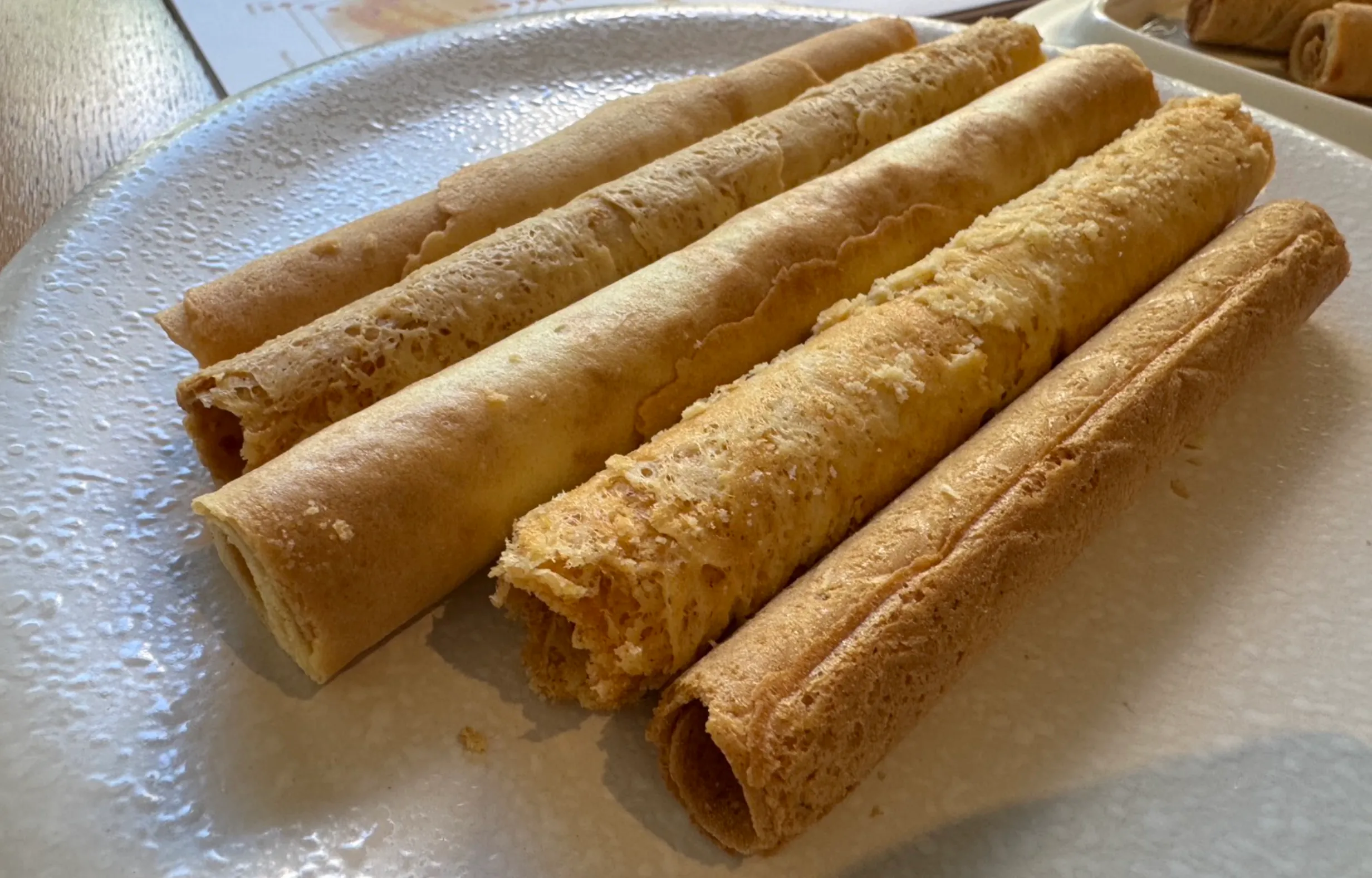
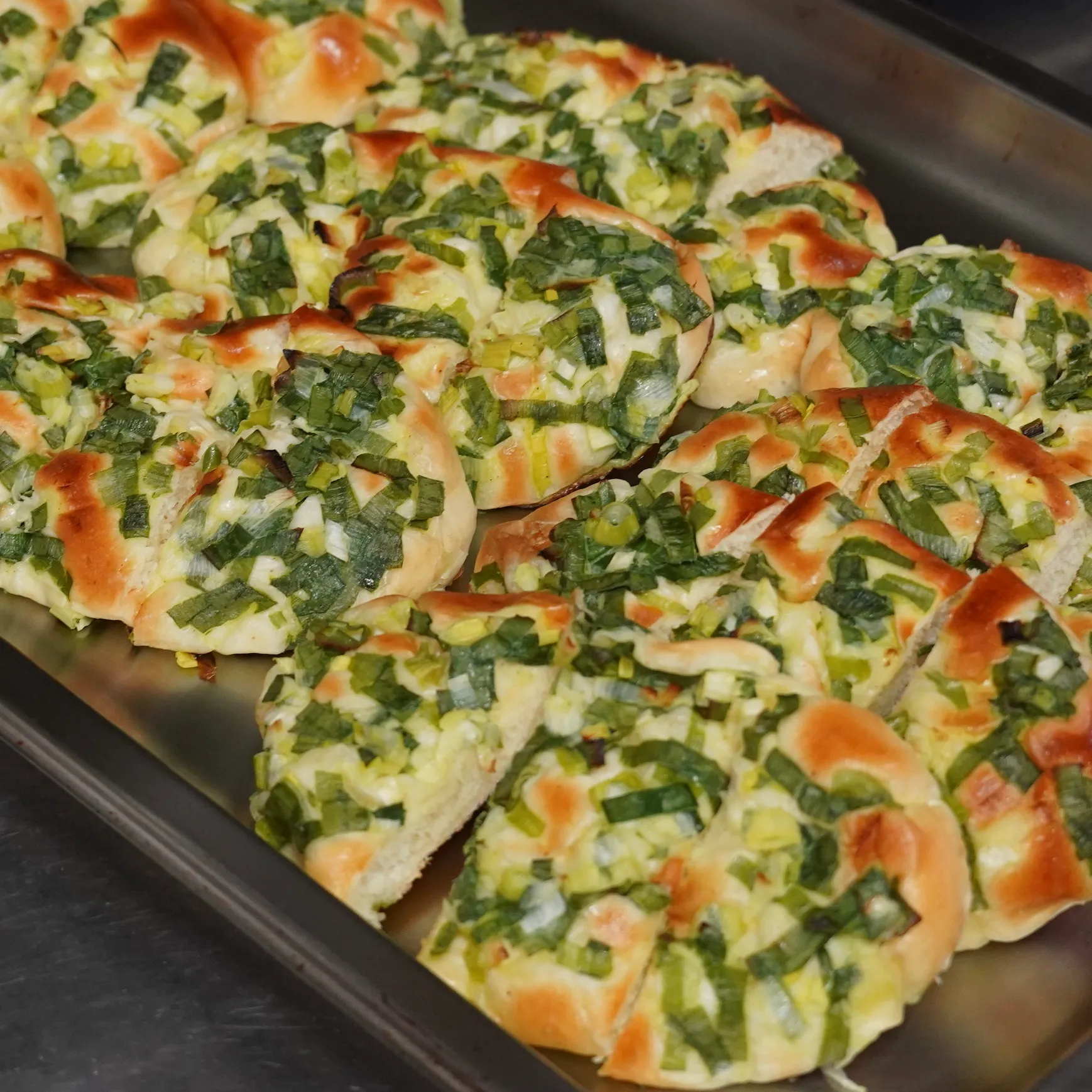
Peanut Brittle: From hard and crunchy to crumbly or melt-in-your-mouth, which style do you prefer?
Peanut brittle is a traditional confection made primarily from roasted peanuts bound together by a sugar syrup.
In the days of scarcity, finished peanut brittle was wrapped in newspaper, stacked into containers resembling cooking oil tins, and sent to local grocery stores to be sold, where it was displayed in glass jars. One bite was incredibly sweet, and back then, simply having a piece of sweet candy was a source of joy. Over time, peanut brittle evolved from a snack made on the spot at temple fairs into a refined gift item, eventually even reaching the level of gourmet products that highlight premium French butter and local Taiwanese peanut varieties.
Exploring the diverse possibilities of peanut brittle through peanut varieties and sugar types
Interestingly, peanut brittle not only spans various culinary categories but is also incredibly diverse in its own form. While all are called "peanut brittle," some are so hard and crunchy they require a forceful bite, others are so crumbly they fall apart at a touch, some are soft and chewy with a pull, and others melt in your mouth. These variations involve the choice of peanut variety, the evolution of roasting techniques, the diverse use of sugar sources, and distinct production processes, creating a map of peanut brittle craftsmanship with a level of complexity rarely found anywhere else in the world.
In terms of the peanuts used, most Taiwanese peanuts originate from varieties developed by the Tainan District Agricultural Research and Extension Station. "Tainan Selection No. 9" is a small-kernel variety and the top choice for peanut brittle that emphasizes aroma; "Tainan No. 11" is a large-kernel variety with high sweetness and a perfect balance of size and texture; "Tainan No. 14" is a large-kernel variety with a rich, oily profile; and "Tainan No. 20" offers high sweetness and a low linoleic acid ratio, which helps prevent the rancid flavor that can often affect peanut brittle.
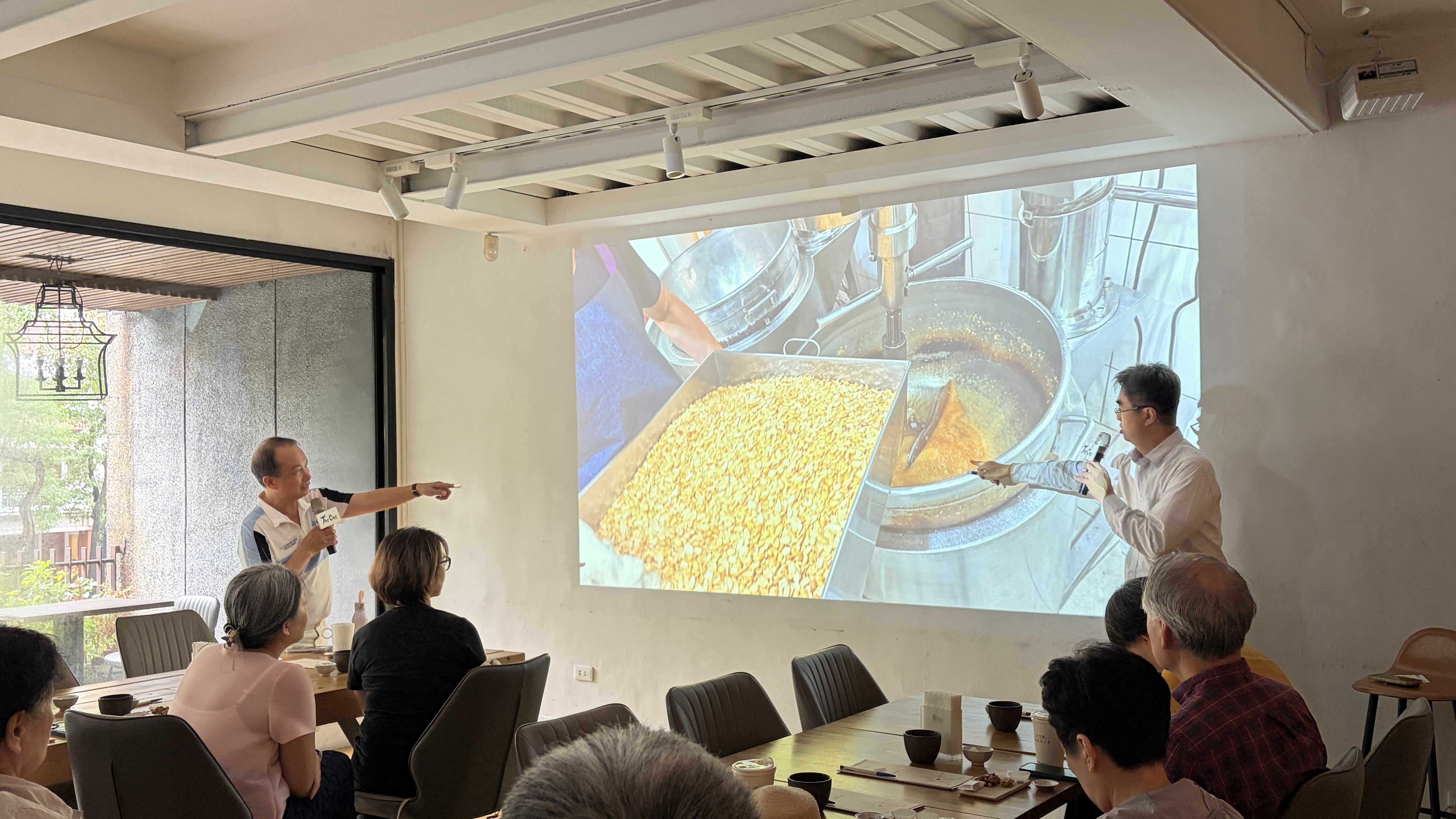
Beyond the variety, the skill of roasting the peanuts significantly impacts the aroma. As temperatures rise from 120°C, where bean and grain notes emerge, the aroma gradually shifts to a mild nutty scent. At 160°C to 165°C, typical roasted peanut, popcorn, and buttery notes appear, while reaching 175°C to 180°C introduces a deep, charred aroma with the risk of bitterness. This means that both under-roasting and over-roasting result in a loss of aroma; only by keeping the temperature within the precise range can the best nutty sweetness be achieved.
On the other hand, the sugar craft is also critical. Most peanut brittle on the market uses a mixture of sucrose and maltose, though in recent years, some shops have replaced maltose with more stable starch syrup. Maltose determines the chewiness and moisture retention, but using too much results in a loss of crunchiness, leading to a soft, sticky texture. Granulated sugar determines the crunch and sweetness, but an excess can easily lead to "sugaring" (crystallization).
Starch syrup, meanwhile, makes the texture less hard and brittle while also being less prone to crystallization. Beyond the type of sugar, the boiling temperature also affects the hardness of the sugar base; for instance, the "firm-ball stage" at 115°C to 117°C with 8% to 10% moisture content results in a soft, chewy product that doesn't stick to the teeth, while the "hard-crack stage" at 121°C to 130°C with 4% to 6% moisture content results in a harder product.
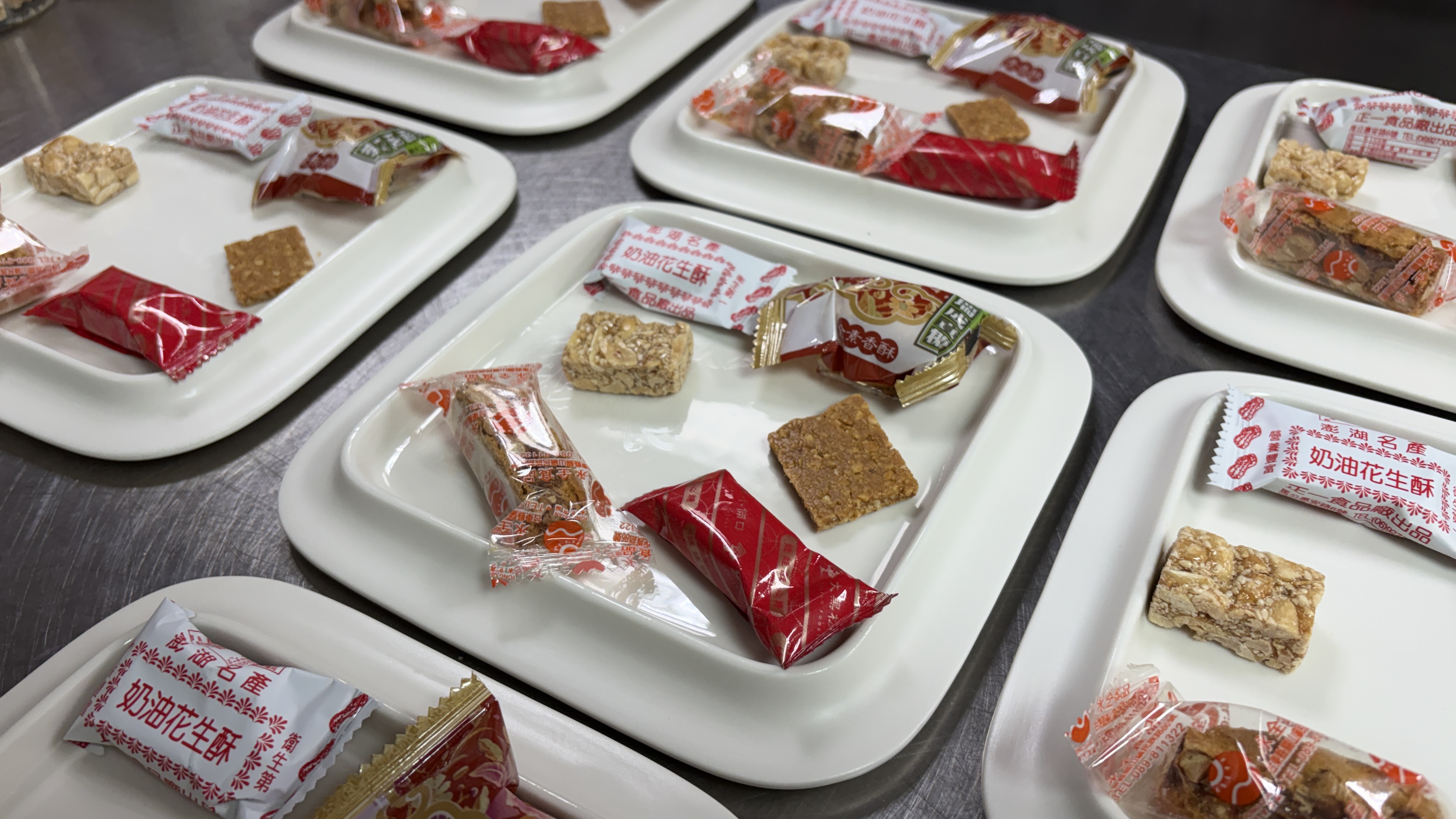
They all look completely different, yet they’re all called "peanut brittle"?!
Influenced by various sugar ratios and techniques, a wide array of Taiwanese peanut brittle has emerged. Below, we categorize different types of peanut brittle based on "sugar ratio," "sugar-making technique," and "additives":
1. By sugar ratio:
① Hard candy type:
Large, whole peanuts are coated in a thick, amber-colored syrup, offering a charming caramel aroma. With a higher sucrose ratio, the texture is hard and crunchy. Examples include "PeanuTend" by Futian Foods and the type of peanut brittle found in Yilan that requires a plane to shave it before being served with ice cream.
② Crispy type:
These usually have a square, bar-like appearance with coarsely crushed peanuts. Some that emphasize the use of pure glutinous rice maltose have a brownish hue, such as the malt peanut brittle from "Chuan Fa Zhi Jia" in Yunlin, while those emphasizing starch syrup are typically transparent.
2. By sugar-making technique:
③ Gong-tang (tribute candy) type:
The production process is similar to soft candy; the key is to boil the syrup to a specific stage and then manually stretch and fold it repeatedly. This incorporates air into the sugar base, creating a crispy texture, with peanut powder wrapped inside so that the textures of the crisp sugar and the powder can complement each other.
④ Crystallized (Anti-sanding) type:
Commonly known as "doll crisp" (wawa su), this is a traditional Taiwanese candy that belongs to the "crisp-heart candy" category, made by pulling and folding maltose and peanuts together. It is also folded multiple times in a short period while the syrup is cooling but before it hardens to create a crispy texture. It is often coated with a layer of white sugar frosting, forming a crisp, sugary shell. A representative brand is Royal Family (Dah Chung Song).
3. By additives:
⑤ Starch-added type:
Commonly known as "peanut cake." The key is adding starch while boiling the sugar. In the past, it was often pressed into turtle shapes using molds and offered at temple fairs.
⑥ Fat-added type:
Often called "buttery peanut brittle." After boiling sugar and maltose to a specific temperature, butter is added and stirred in, followed by peanut powder or crushed peanuts. The mixture is then pressed into shape. As the fat disperses into the sugar, it creates a crumbly texture and a rich buttery aroma.
⑦ Baking soda peanut brittle:
After boiling and concentrating the syrup, it is removed from the heat and baking soda is quickly stirred in, causing the syrup to instantly bubble with carbon dioxide. Once cooled and set, it forms a porous, glass-like candy with a light, crispy texture and a bittersweet, caramelized flavor. This technique is used to make the traditional peanut brittle found in the Guanshan area of Taitung.
Savoring the flavors of peanut brittle in four steps: "Look, Smell, Bite, Wait"
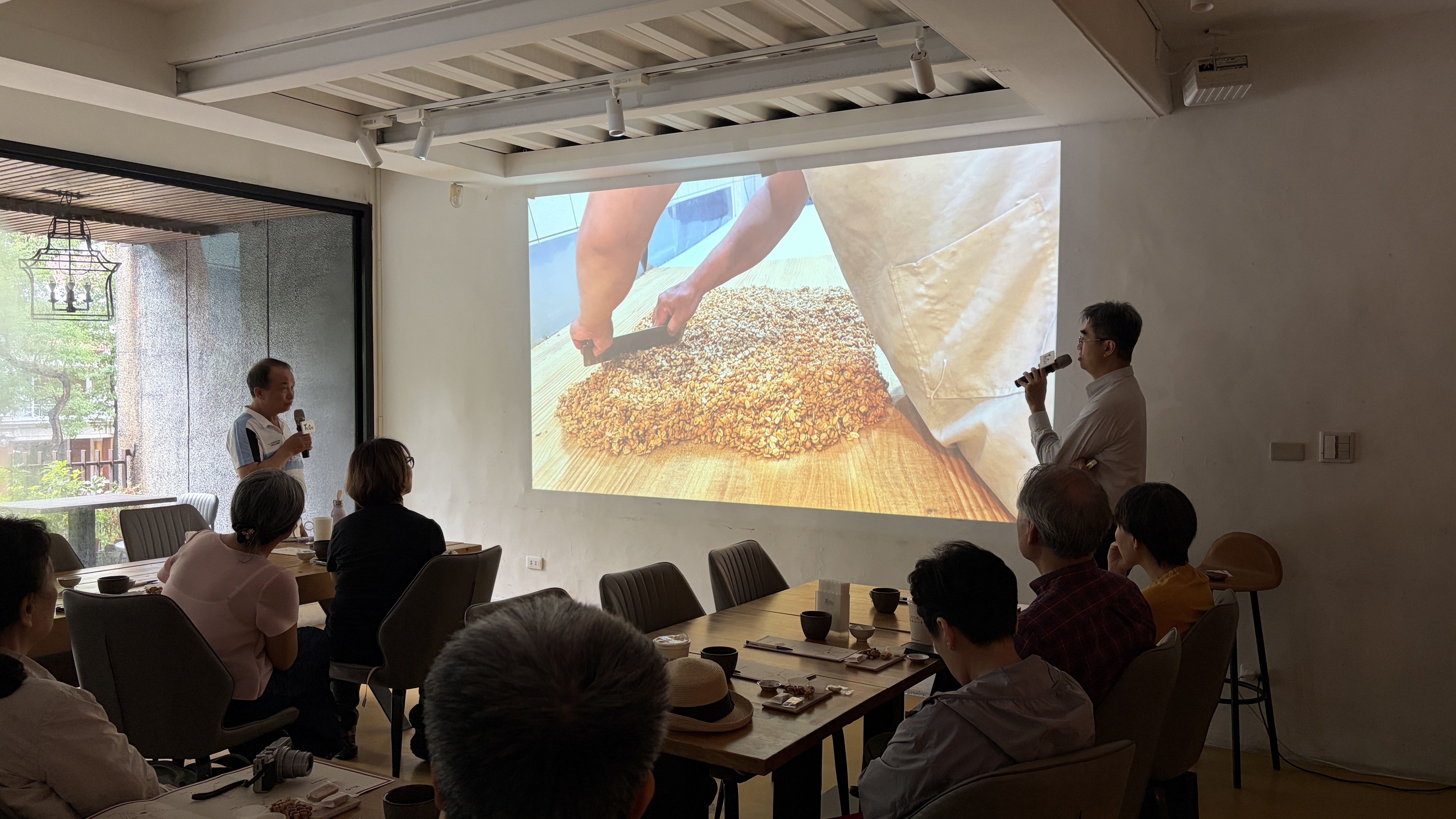
On August 20, 2026, T/ABLE hosted a "Taiwanese Peanut Brittle" workshop, inviting Chen Chin-tsun, second-generation owner of PeanuTend, to explore the development and craftsmanship of Taiwanese peanut brittle. Participants evaluated various types based on "peanut aroma," "fatty finish," "sugar texture," "perceived sweetness," and "overall balance."
Evaluation Criteria
- Step 1 Look: Observe the cross-section to see if the peanuts are whole, coarsely crushed, finely crushed, or in powder form. Note the color of the sugar (amber, cloudy white, or white frosting) and the ratio of peanuts to sugar.
- Step 2 Smell: Identify the aroma—whether it is nutty, caramelized, or buttery—and check for any off-notes like rancidity.
- Step 3 Bite: Assess the texture: "hard and crunchy" (a clear sound when bitten), "crispy" (breaks easily), "crumbly" (dissolves slowly), "soft and melt-in-the-mouth," or "chewy/sticky." Also, observe how the peanut oils are released during chewing.
- Step 4 Wait: After swallowing, wait 10 to 30 seconds to feel the lingering peanut oil finish and determine if the added salt effectively enhances the overall sweetness and depth of flavor.
Representative Peanut Brittle Brands
- PeanuTend: A long-standing Monga brand, "PeanuTend" is a play on the Chinese words for "not sweet," reflecting its focus on low-sugar, premium products. They insist on using peanuts from Yunlin, Taiwan, currently favoring the Tainan No. 11 variety. Their offerings include traditional hard candy, standard maltose-bound brittle, and a premium version featuring French Échiré butter, making them a leader in the high-end Taiwanese peanut brittle market.
- Chuan Fa Home: Known for their peanut brittle made with pure glutinous rice maltose, their version features a deep brownish hue and a distinct malt aroma, preserving the traditional Taiwanese style of maltose candy.
- 99 Sunflower: Their "doll crisp" (wawa su) is a signature of Taiwan’s recrystallized sugar technique. It features a crunchy white sugar-crust exterior and an interior made by pulling and folding maltose with peanuts, representing a fusion of gong-tang and recrystallized sugar craftsmanship.
- Yung Chuan Peanut Crisp: A traditional puffed-style peanut crisp from the Guanshan area of Taitung. Baking soda is added to the syrup to create instant aeration, resulting in a porous, glass-like sugar structure known for its airy, crispy texture and a bittersweet, charred flavor.
- Zheng Yi: A representative souvenir from Penghu, famous for its butter peanut crisp.
- Tsai Chi Peanut Candy: Featuring pure maltose coated in peanut powder, this candy has a very short shelf life. It represents a unique artisanal craft in the world of Taiwanese peanut candy, leaning heavily into a handmade, boutique approach.
From cheap snack to artisanal confection: Is a "tasting vocabulary" the key?
Overall, Taiwanese peanut candy has recently been evolving along two main axes: "premiumization" and "varietal diversification." The former targets the boutique gift market by highlighting ingredients like French Echire butter and specific peanut varieties from Tainan. The latter is driven by ongoing breeding programs at agricultural research stations, which provide more possibilities for flavor differentiation. However, the industry also faces challenges, including a shrinking local planting area, competition from imported Vietnamese peanut candy, and a growing consumer trend toward reducing sugar intake.
In an era where eating sugar is often viewed with guilt, peanut candy—a traditional treat built on a foundation of sugar—needs a clear tasting vocabulary to help consumers appreciate its craftsmanship and elevate it from a "cheap snack" to an "artisanal confection." Next time you pick up a piece of peanut candy, take a moment to observe the distribution of the peanuts, inhale the aroma of the roasted nuts and sugar, and then take a bite to experience the sugar shattering as the peanut oils slowly emerge. By spending just ten seconds more, a familiar snack might reveal layers worth savoring.
This article was compiled and edited based on transcripts and summaries from the T/ABLE food culture lecture series, as well as the researcher's field notes. All brand information is accurate as of the original source material.
Content Editor: Michelle Guo
Reviewer: Andy Hsu
Photo: The One