Egg Rolls: From a Hong Kong Treat to a Taiwanese Lunar New Year Tradition
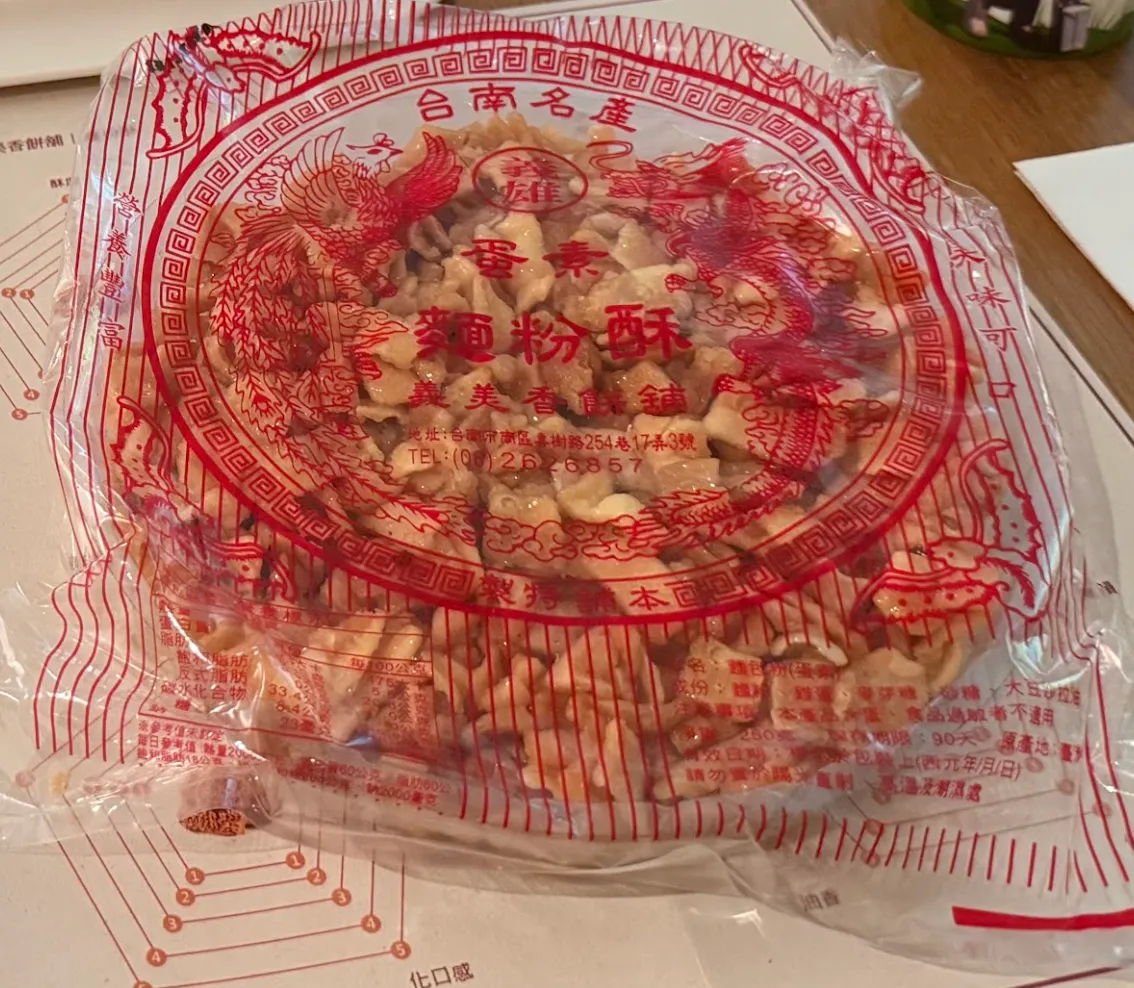
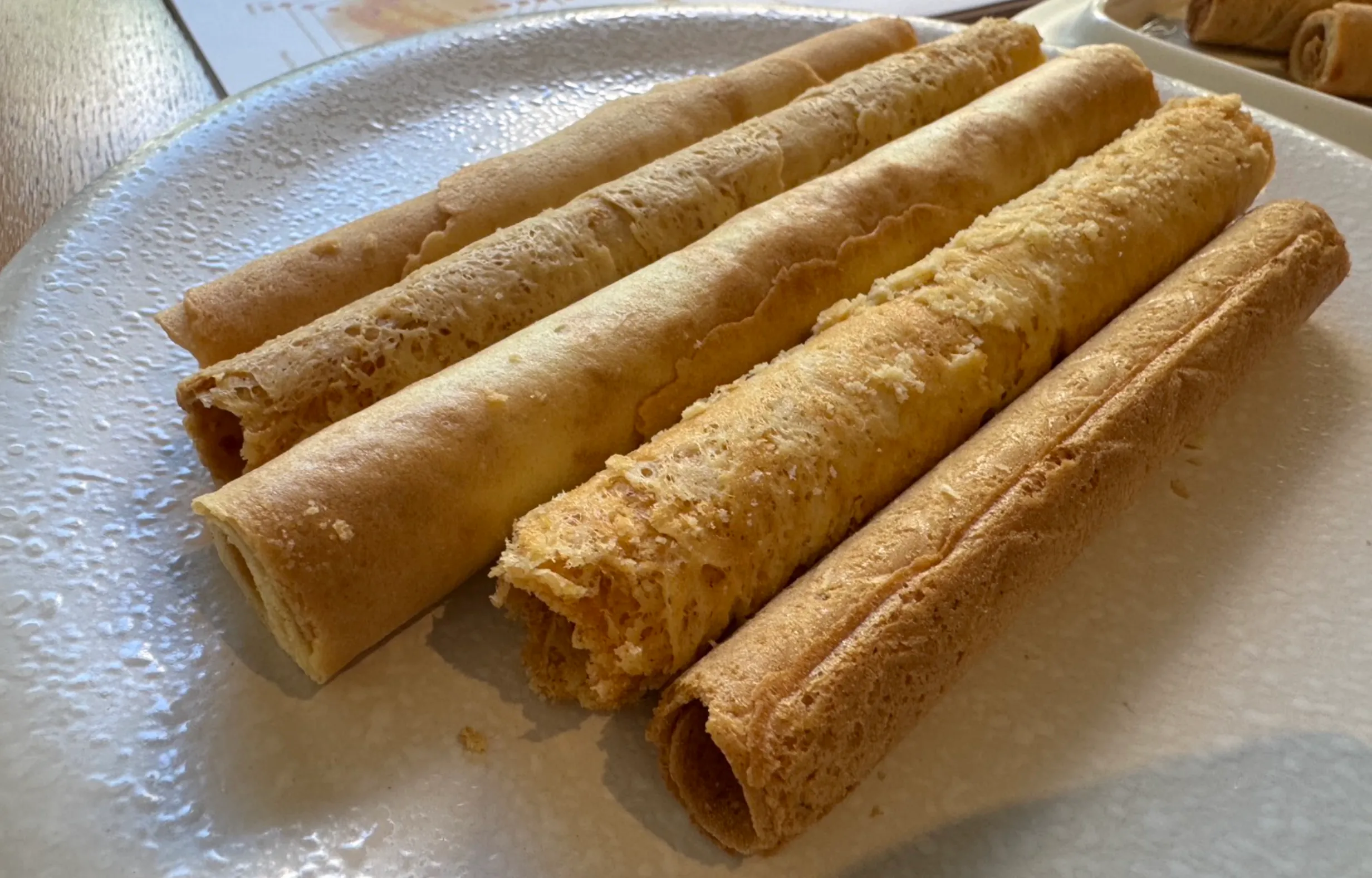
In childhood memories, egg rolls were limited-edition treats gifted during the Lunar New Year. They are made from a batter of eggs (chicken or duck), flour (or rice flour), fat, and sugar, which is griddled and then rolled into a cylindrical shape while still hot. They are typically characterized by their rolled form, thin and crispy texture, and irregular charred edges. You can often gauge the texture by the thickness of the edges: the thinner the edge and the larger the gaps, the crispier the bite; conversely, thicker versions tend to have a softer, more crumbly texture.
From Hong Kong Dim Sum to Taiwanese Souvenirs
According to field research, the egg roll industry in Taiwan traces its roots to the "Hi-Lai" brand. By targeting the Lunar New Year gift market, they transformed egg rolls from loose snacks into packaged tin gift sets and secured food certifications. Their slogan, "Joyful Hi-Lai," marks a significant milestone in Taiwan’s shift toward gift-oriented snack marketing. Since then, a multitude of new brands have emerged, leading to highly diversified flavors and shapes. In recent years, we have even seen the rise of figure-eight and teardrop-shaped varieties designed to prevent breakage.
Four Core Elements: The Building Blocks of Egg Roll Variations
The core ingredients of an egg roll are remarkably simple: fat, eggs, flour, and "others" (variable additives like sugar, baking soda, flavorings, and sesame). Therefore, the fundamental difference between an egg roll and a standard cookie lies not in the ingredients themselves, but in their ratios—the proportions are the key variable that shapes the final texture.
In terms of production, the first step is to cream the fat and sugar together. Whether using coarse granulated sugar or fine powdered sugar affects the density of the air pockets created during mixing, which directly influences the crispness of the finished product. Next, flour is added. While low-gluten flour is the standard choice, recipes vary by brand; some even use rice flour to create "rice egg rolls" for those with gluten sensitivities. During mixing, it is crucial to avoid incorporating too much air into the batter. Once all ingredients are combined, the batter must rest to allow the flour, moisture, and fat to fully integrate. The resting time varies by recipe and is not standardized.
The choice of fat—whether butter-based, lard-based, a mixed blend, or vegetable oil-based—determines the base aroma. Butter-based versions offer a distinct creaminess; lard-based versions focus on the pure, savory profile of lard; traditional-style brands often use a blend of lard and vegetable oil; while vegetable oil-based versions have a more neutral, light scent.
The choice of eggs also influences the flavor profile. Chicken eggs are the mainstream choice, offering a mild aroma. Duck eggs provide a richer, more intense egg flavor with subtle, complex notes. Versions made exclusively with egg whites, omitting the yolks, offer an entirely different texture.
The baking equipment and heat control are critical to the consistency of the final product. The rolling process must be performed immediately after the batter is baked; once it cools, it sets and cannot be reshaped. This is one of the steps in egg roll craftsmanship that most tests the maker's speed and experience.
Evaluation Criteria
- Appearance/ Edge thickness, roll density, and gap size
- Aroma/ Fat type and intensity of egg aroma
- Texture/ Crispness
- Flavor/ Overall aftertaste and the layering of egg and butter notes
- Color/ Color depth
Handmade and Nutritious? The Cultural Impression of Taiwanese Egg Rolls
In March 2026, T/ABLE Taiwan Flavor Studies hosted a "Taiwanese Egg Roll" workshop. We invited folklore researcher Yen Chen-yu to share his findings on the origins of Hi-Lai egg rolls, while food scholar Hsu Chung provided a guided tasting from the perspective of food science. The session also compared the flavor profiles of mainstream brands and unique variations:
- Hi-Lai: Early versions used lard, later shifting to a blend of lard and salad oil. The eggs were sourced from the Erlin and Dacheng areas. The brand has changed hands multiple times since its inception, and the current commercial version differs from the founder's original recipe.
- Fuyihsin: A well-known Chiayi pastry brand, famous for its egg rolls made with a signature blended oil recipe.
- Duoduoxin Handmade Bakery: Specializes in flour-free rice egg rolls, marketed as a safe option for those with gluten sensitivities.
- A-Tian Pastry Factory: Emphasizes the use of duck eggs instead of chicken eggs, resulting in a distinctively richer egg flavor compared to standard versions.
- Egg White Workshop: Uses only egg whites, omitting the yolks and the characteristic aroma provided by lecithin.
- HiWalk: Features a flatter, filled design that leans more toward a cookie-style product.
- Lady Hanami: Plum blossom-shaped mille-feuille egg rolls.
- Pin Hsiang Egg Rolls: Short-tube phoenix rolls that are savory, sweet, thin, and crispy.
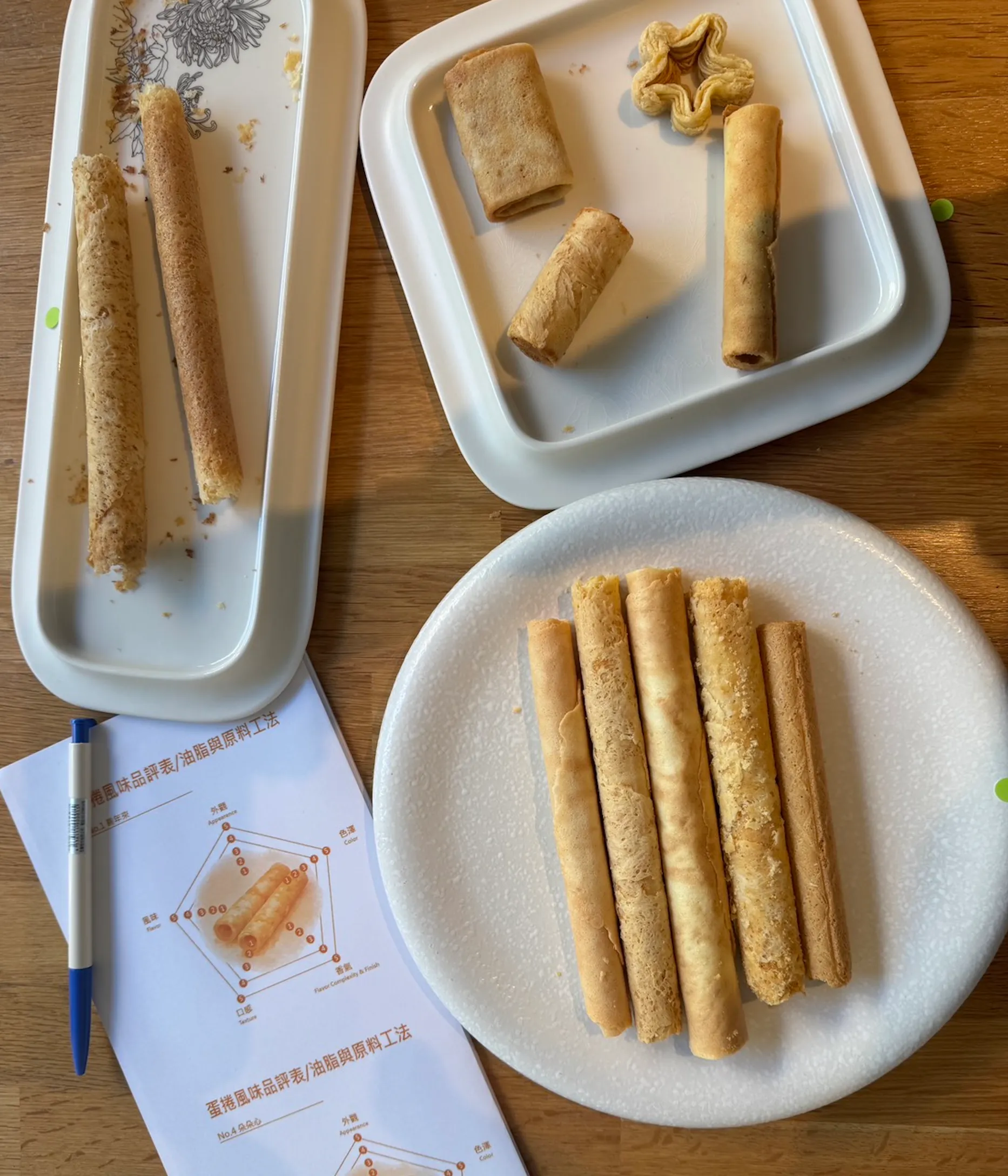
The evolution of contemporary egg roll brands has focused primarily on engineering improvements in shape and packaging, such as figure-eight, teardrop, flower, and solid-core designs. Beyond their eye-catching appeal and bite-sized convenience, these innovations also address the long-standing issue of high breakage rates during shipping and retail distribution for gift-giving. Another evolutionary trend is the diversification of flavors and market positioning; products like gluten-free rice egg rolls, pure egg-white rolls, and duck-egg rolls are all modern offerings developed to meet specific dietary needs or flavor preferences.
Looking at Taiwanese egg rolls as a whole, the biggest difference from their Hong Kong counterparts is their status as a quintessential Lunar New Year gift, deeply tied to the cultural associations of "handmade craftsmanship" and "nutritional value." Even though egg roll production is now fully industrialized, many older generations still perceive them as having a "homemade" quality and high nutritional value. This perception creates a gap between cultural belief and the food science reality—that egg rolls are typically high in sugar and fat—yet it continues to shape the category's cultural standing in Taiwan. Consequently, the core challenge facing the egg roll industry, beyond the generational gap in passing down manual techniques, is the ongoing tension between collective nostalgia and modern nutritional education.
This article was compiled and edited based on transcripts and summaries from the T/ABLE food culture lecture series, as well as the researcher's field notes. All brand information is accurate as of the original source material.
Content Editor: Guo Hui
Reviewer: Hsu Chung
Photography: The One