Milk Crumble Buns and the Afterlife of American Aid
Pick up a milk crisp bread, and before you even take a bite, the warm, toasted aroma of milk greets you—rich but not cloying, with that signature hint of powderiness that has been a shared memory for generations of Taiwanese people.
American aid, local ingenuity: Growing a uniquely Taiwanese flavor
In fact, the milk crisp bread is a product that grew directly from Taiwanese soil. In the 1950s, as U.S. aid brought an influx of skim milk powder to Taiwan, milk powder transitioned from a "supplement" to a "culinary ingredient." By 1968, the Taiwan Wheat Products Promotion Council began hosting baking training sessions, leading to the systematic professionalization of local bakers. With milk powder, fats, and sugar readily available, the milk crisp filling naturally took shape in the hands of these artisans. History provided Taiwanese bakers with American milk powder and flour, and they used these ingredients to create milk crisp—making the milk crisp bread a local innovation born of specific historical conditions and a key entry point for understanding Taiwanese food culture.
After 1983, the rise of "Mei-Er-Mei" breakfast shops ushered in the era of Western-style breakfasts, and milk crisp evolved from a sweet bread filling into a spread for thick-cut toast. This shifted its positioning from a "premium sweet bread" in bakeries to a "daily staple" in breakfast shops. In the last decade, milk crisp spreads have become branded products, with some even positioning themselves as the "Hermès or LV of milk crisp," sparking new trends of long queues at popular shops. Some establishments have also begun replacing traditional Anchor or margarine with fermented French butter, fueling discussions about upgrading recipes.
Evaluation Criteria
- Milky Aroma/ Type and amount of milk powder / Light ←→ Rich
- Sweetness/ Type and ratio of sugar / Subtle ←→ Intense
- Richness of Fats/ Type of fat / Refreshing ←→ Decadent
- Texture/ Milk powder graininess + aeration level / Sandy ←→ Creamy
- Aftertaste/ Fat melting point + complexity of milk powder / Short-lived ←→ Lingering
Milk powder, fat, and sugar: The golden triangle of milk crisp flavor
When it comes to the flavor profile of milk crisp, milk powder, fat, and sugar form its "golden triangle." "Milk powder" determines the base of the milky aroma and the intensity of the powdery texture; for instance, whole milk powder provides a rich, creamy mouthfeel, while skim milk powder emphasizes the powdery sensation. "Fat" determines the smoothness and fragrance, serving as the key variable in quality and the main focus of recent recipe upgrades. Animal-based butter offers a rich milky aroma, complex layers, and a long-lasting finish; vegetable shortening is stable and neutral; fermented butter uses lactic acid fermentation to reduce greasiness and add flavor depth; and margarine provides an immediate impact but has a more limited duration on the palate. Finally, "sugar" determines the sweetness and texture; powdered sugar creates a fine, dense consistency, while granulated sugar adds a tactile crunch, with the caramelization during baking bringing out the toasted notes of the Maillard reaction.
On the other hand, the bread itself interacts with the milk crisp to create vastly different experiences. If the bread is too dry, the milk crisp feels overly greasy; if it is too soft, it lacks the structure to support the filling. The ideal state is soft and moist, complementing the milk crisp. Consequently, everything from the flour to the fermentation method is carefully considered. High-gluten flour provides elasticity and a good chew, preventing the milk crisp from soaking through, while lower-gluten flour creates a soft, cake-like texture that blends easily with the sweet filling. Regarding fermentation, the direct method is simple and produces a straightforward flavor with a firmer crumb; the sponge-dough method increases softness and moisture retention, making it the mainstream choice for Taiwanese sweet breads. If combined with the tangzhong (water roux) method, it enhances the chewiness and "snap" of the bread, a common choice for thick-cut toast.
It is worth noting that different bread shapes also affect when the milk crisp releases its aroma. The rounded "bomb" shape disperses the toasted aroma, perfect for a "delayed explosion" of flavor; the braided shape creates rhythmic layers of toasted notes, with the milk crisp folded in to provide an "interwoven" experience; the surface spread on thick-cut toast offers a uniform, "all-over" experience; and the multi-layered structure of the Mexican-style bun is a prime example of how Taiwanese bakers have localized Western techniques.
How should you enjoy milk crisp bread?
Step 1 Aroma: Smell it before cutting; the initial scent accounts for 70% of your overall impression.
Step 2 Cross-section: Cut it open to examine the distribution of the milk crumble and compare it with the structure to make predictions.
Step 3 Bread base: Taste the outer edge without the filling first to establish a baseline.
Step 4 Milk crumble: Chew the whole bite until it melts to fully experience the retronasal aroma.
Step 5 Aftertaste: Wait 5 seconds after swallowing to distinguish between artificial richness and a true lingering finish.
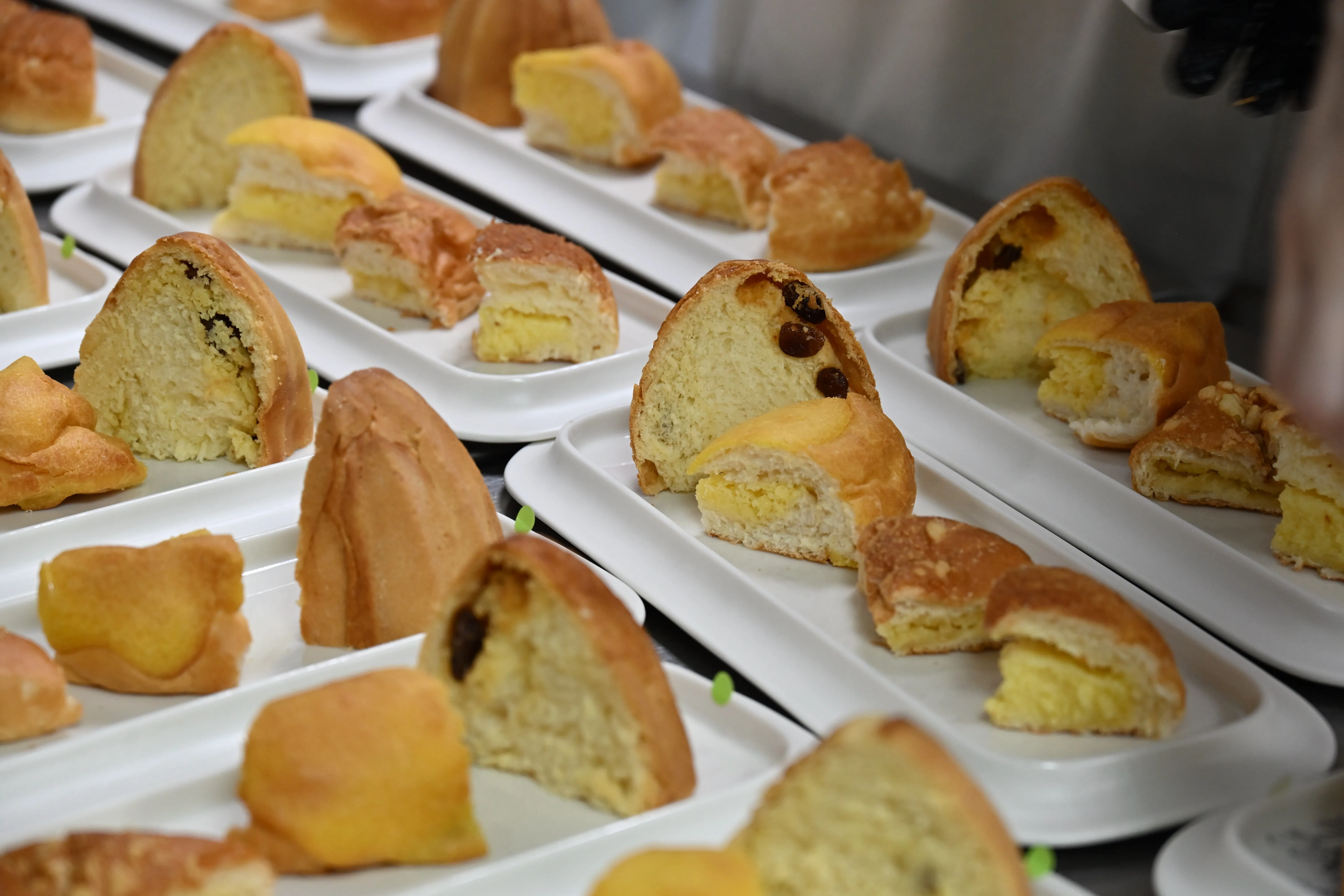
In June 2026, T/ABLE Taiwan Flavor Studies hosted a "Taiwanese Milk Crumble Bun" seminar. The event compared five types of fats—margarine, shortening, Anchor butter, Danish cultured butter, and French cultured butter—analyzing differences in aroma, melt-in-the-mouth quality, aftertaste, and sweetness. It also explored how different bread-making techniques and toast structures affect texture and shelf life. Attendees sampled various styles of milk crumble buns, from "bomb" buns and braided buns to thick-cut toast and pineapple buns, to analyze the flavor logic behind each:
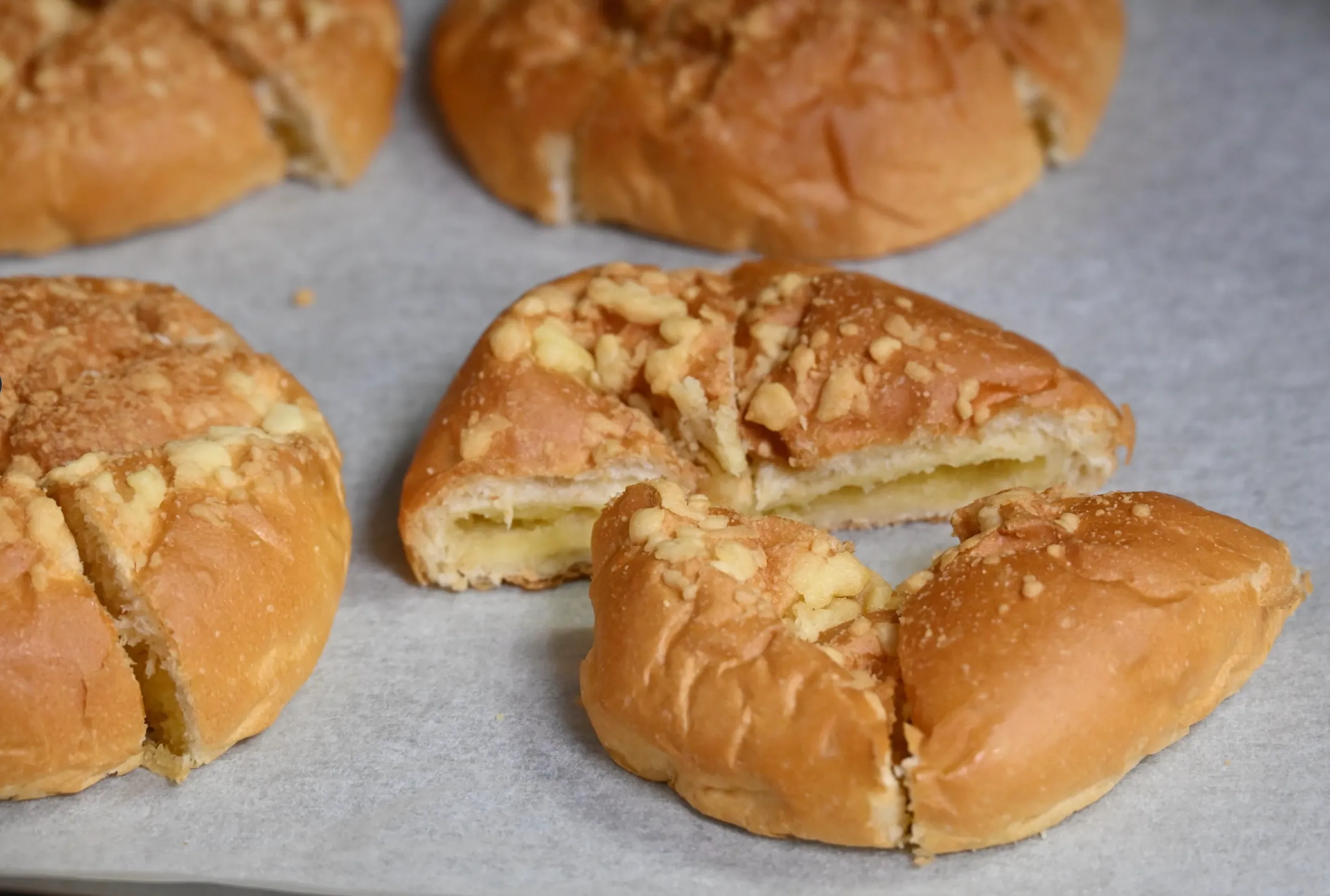
- Internal Filling Style: Such as "bomb" or braided buns, where the milk crumble is encased inside the dough. The bread provides structural support, and the aroma is gradually released as you chew. This is the most traditional and common form.
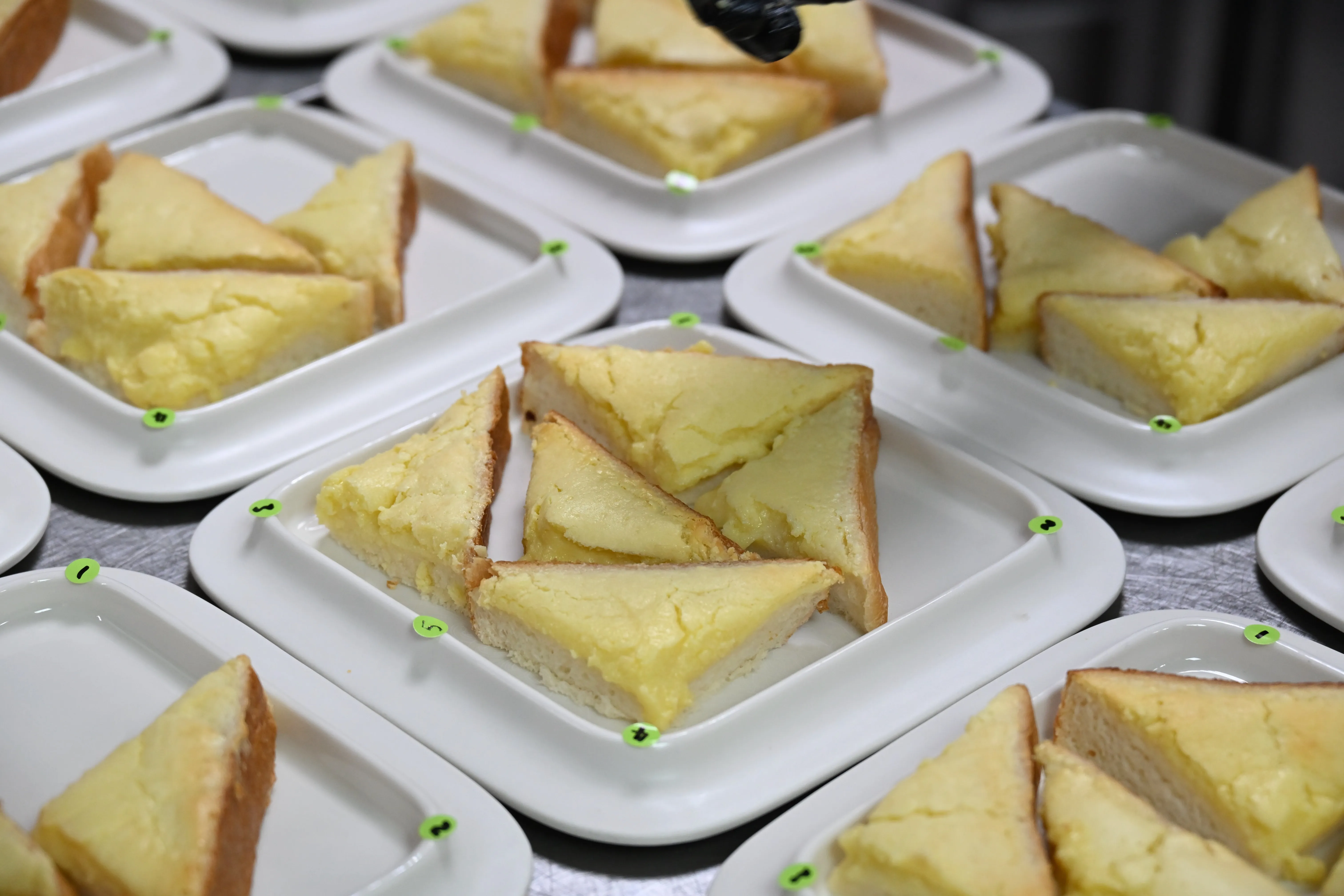
- Surface Spread Style: Such as thick-cut toast, where the milk crumble is spread on the surface and then baked. This provides "full-coverage" aroma and is the standard style for thick-cut toast in breakfast shops.
- Composite Style: Such as Mexican buns or pineapple milk crumble buns, where the milk crumble is combined with additional toppings to create a multi-layered texture, with the bread, crumble, and crust each playing a distinct role.
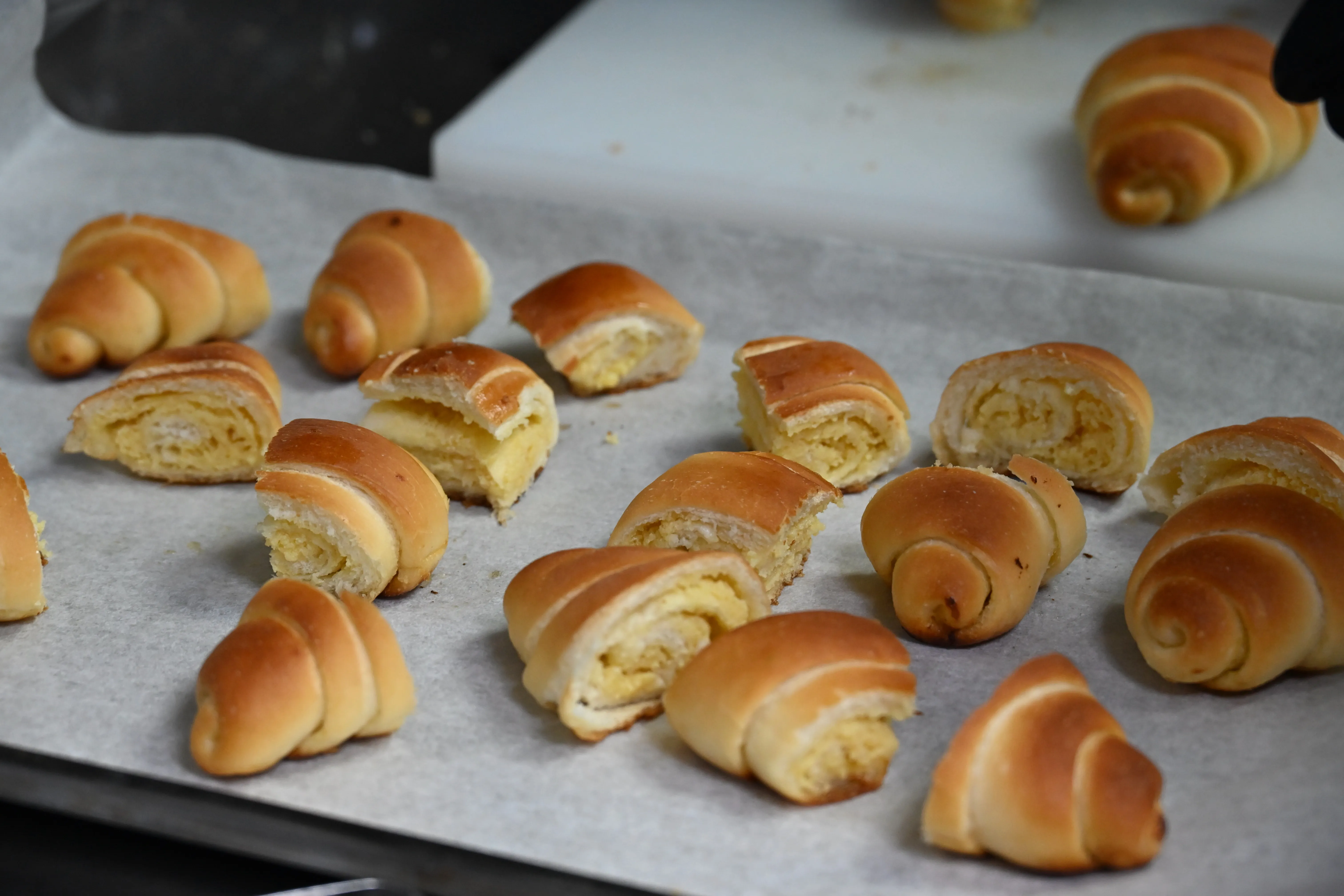
From breakfast shops to bakeries: A unique take on milk crumble
Looking at the role of milk crumble buns in Taiwanese life, two distinct scenes emerge. One is the thick-cut toast from breakfast shops—a daily, accessible, 7:00 AM fast-food staple. The other is the sweet bun shelf in a bakery—a treat for afternoon tea, an occasional indulgence with a touch of ritual. In recent years, the rise of popular, queue-worthy shops has turned milk crumble brands into social media status symbols, while many bakeries are focusing on recipe upgrades, innovative bread bases, or smaller portion sizes.
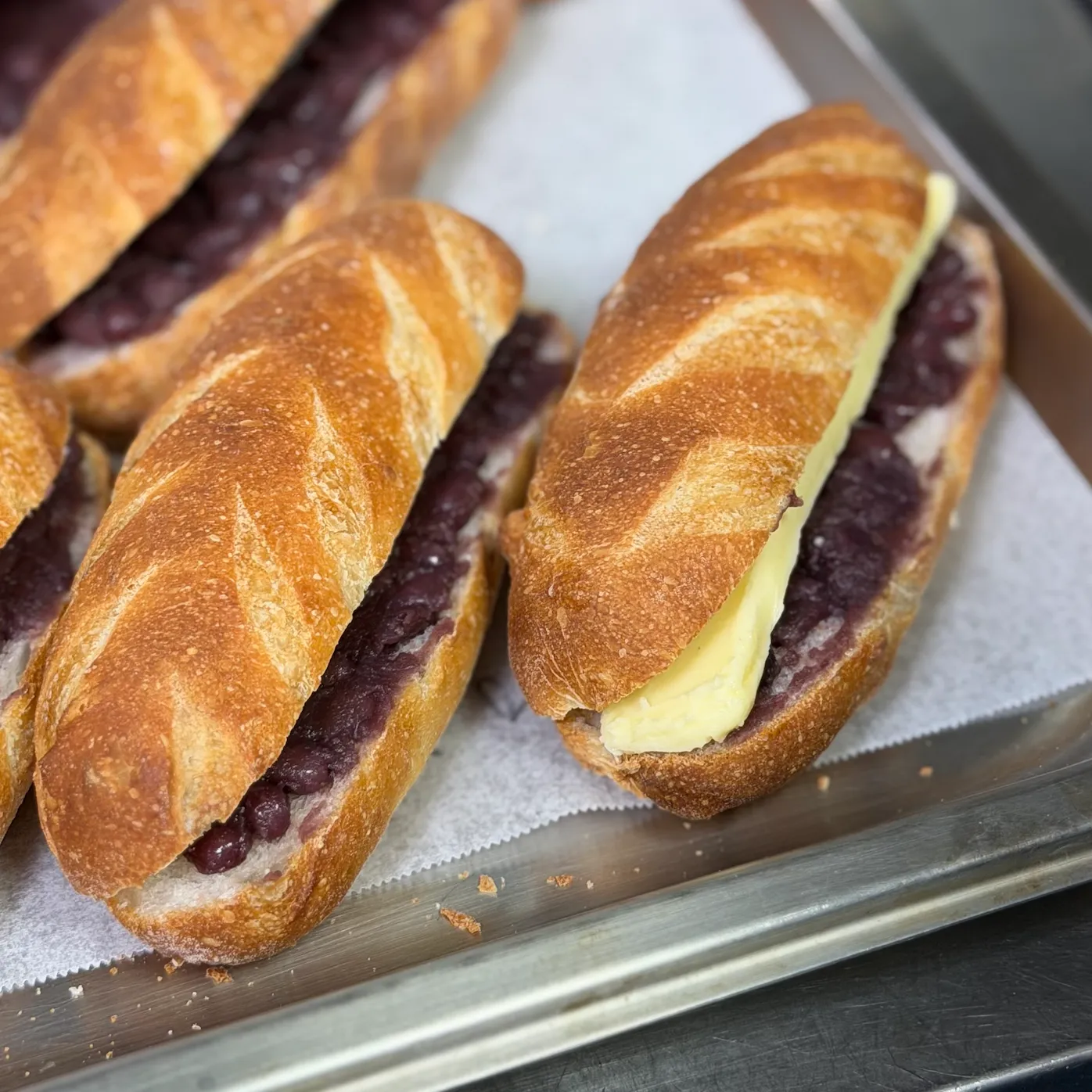
"Recipe upgrades" include replacing margarine or standard butter with cultured butter to emphasize the transparency of the fat source, adding heavy cream to create a "milk custard" for a smoother, richer texture, or pairing milk crumble with salted egg yolk (golden sand) to create a sweet-and-savory contrast. "Bread base innovation" involves pairing milk crumble with non-traditional bases like French bread to explore new flavor possibilities. Finally, the "small-size trend" responds to modern consumers' desire to manage starch intake, using compact, shareable designs that allow consumers to stop at the peak of enjoyment, leaving them wanting more while making the buns easy to reheat and share at home.
Looking ahead, the core challenge for the milk crumble bun is the generational gap in flavor memory. Older consumers have deep sensory memories of Anchor butter, which forms their benchmark for "authentic" milk crumble. Younger bakers are introducing French cultured butter, which brings more complex flavor layers, but may feel "wrong" to those accustomed to margarine-based versions. However, the milk crumble bun was never intentionally invented; it has no original text to trace back to and no orthodoxy to defend. Perhaps it is precisely because there is no "authentic" version that everyone has the right to define the taste they love.
This article was compiled and edited based on transcripts and summaries from the T/ABLE food culture lecture series, as well as the researcher's field notes. All brand information is accurate as of the original source material.
Content Editor: Michelle Guo
Reviewer: Andy Hsu, Yang Chih-Wei
Photo: The One