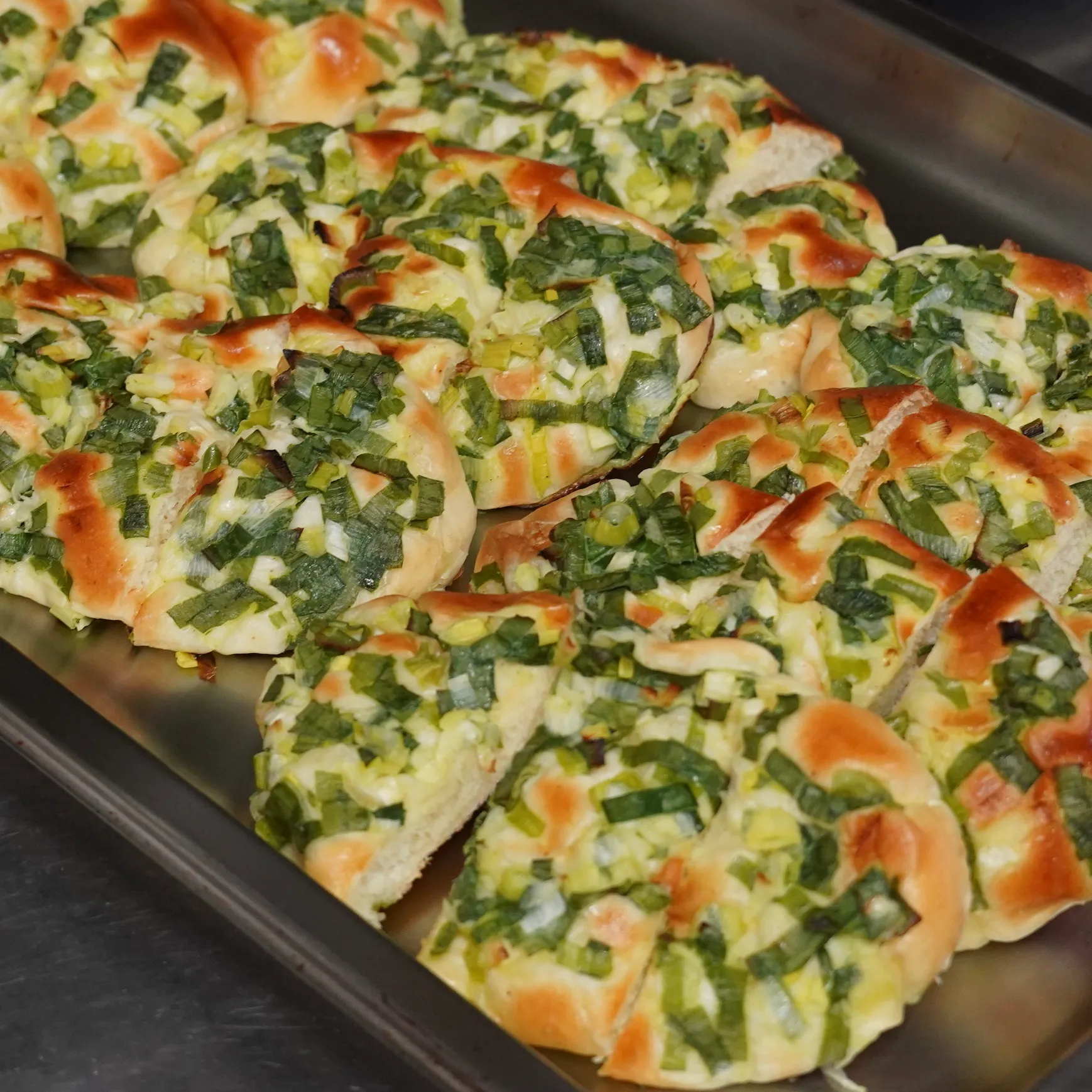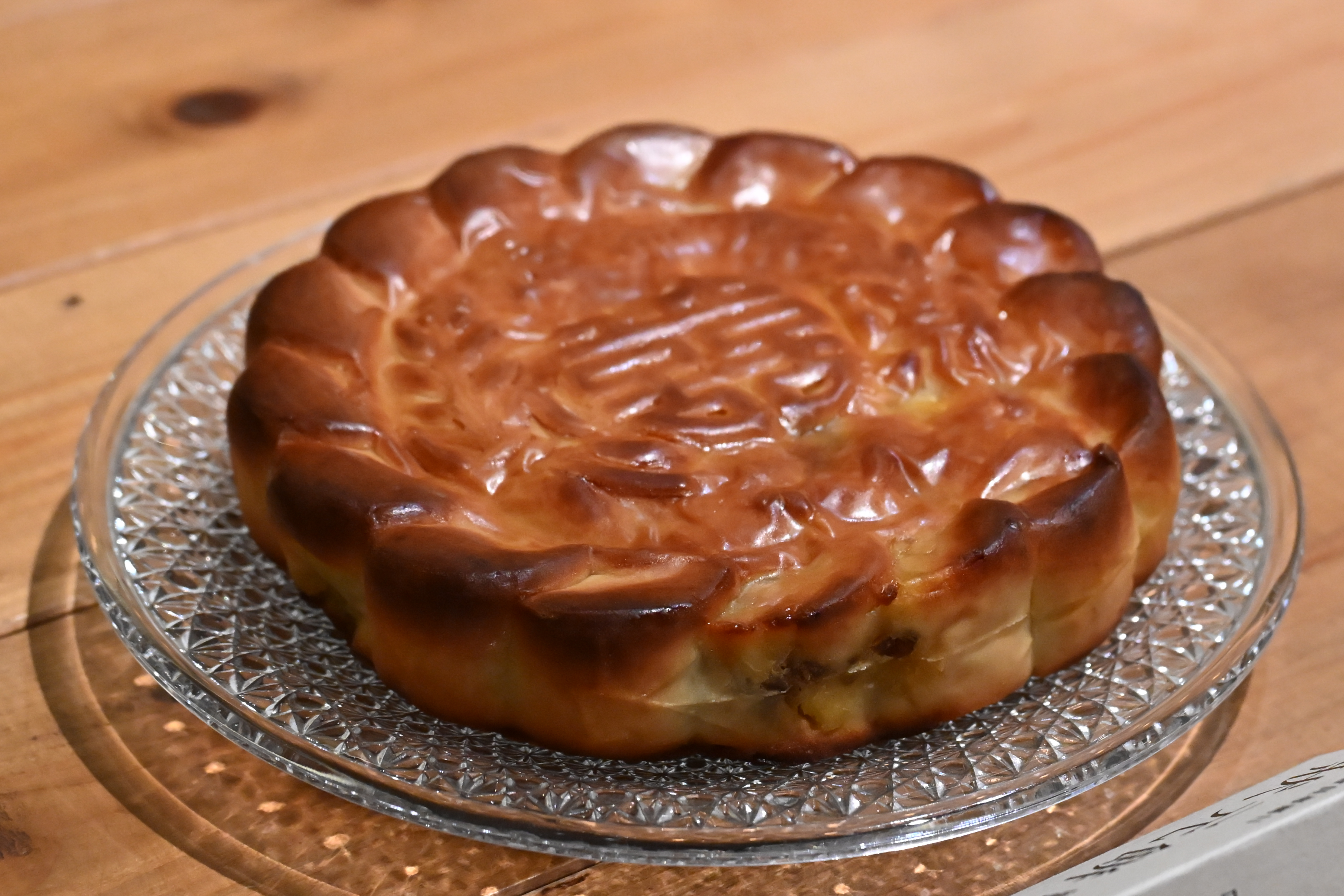
Mooncakes: Savory, Sweet, and Flaky! From Mung Bean Pastries to Egg Yolk Pastries, How Did Taiwanese Mooncakes Become What They Are Today?
In the past, walking into an old-fashioned bakery a few days before the Mid-Autumn Festival meant seeing a dozen types of pastries lined up behind a glass display. Today, egg yolk pastries from famous shops have become the most sought-after social currency of the season. In fact, while they share the name "mooncakes," their significance and flavor profiles have changed drastically over time.
Historically, the Mid-Autumn Festival was celebrated as the birthday of the Moon Goddess (Taiyin Niangniang). During the Qing Dynasty, families would offer mooncakes and vegetable cakes as sacrifices. These early mooncakes, known as "Mid-Autumn cakes," were made of flour and sugar with various fillings. The day was also marked by the "Bo Bing" (mooncake dice game), where red characters were written on the cakes, and players rolled dice with red and black dots; those who rolled specific combinations were considered to have the good fortune of a "top scholar."
During the Japanese colonial period, the establishment of wheat breeding and flour milling factories helped complete the baking industry chain. Encouraged by pastry competitions, bakeries began to observe and learn from one another, driving technical improvements. Mooncakes became more refined in technique and smaller in size, moving toward the delicate style of wagashi. After the war, the influx of affordable American aid flour made mooncakes widely accessible. Later, influenced by Western fast food and wedding pastry culture, they evolved into premium products, often incorporating local agricultural ingredients and creative packaging. In recent years, a new generation of chefs has pushed items like egg yolk pastries to the pinnacle of gourmet status.
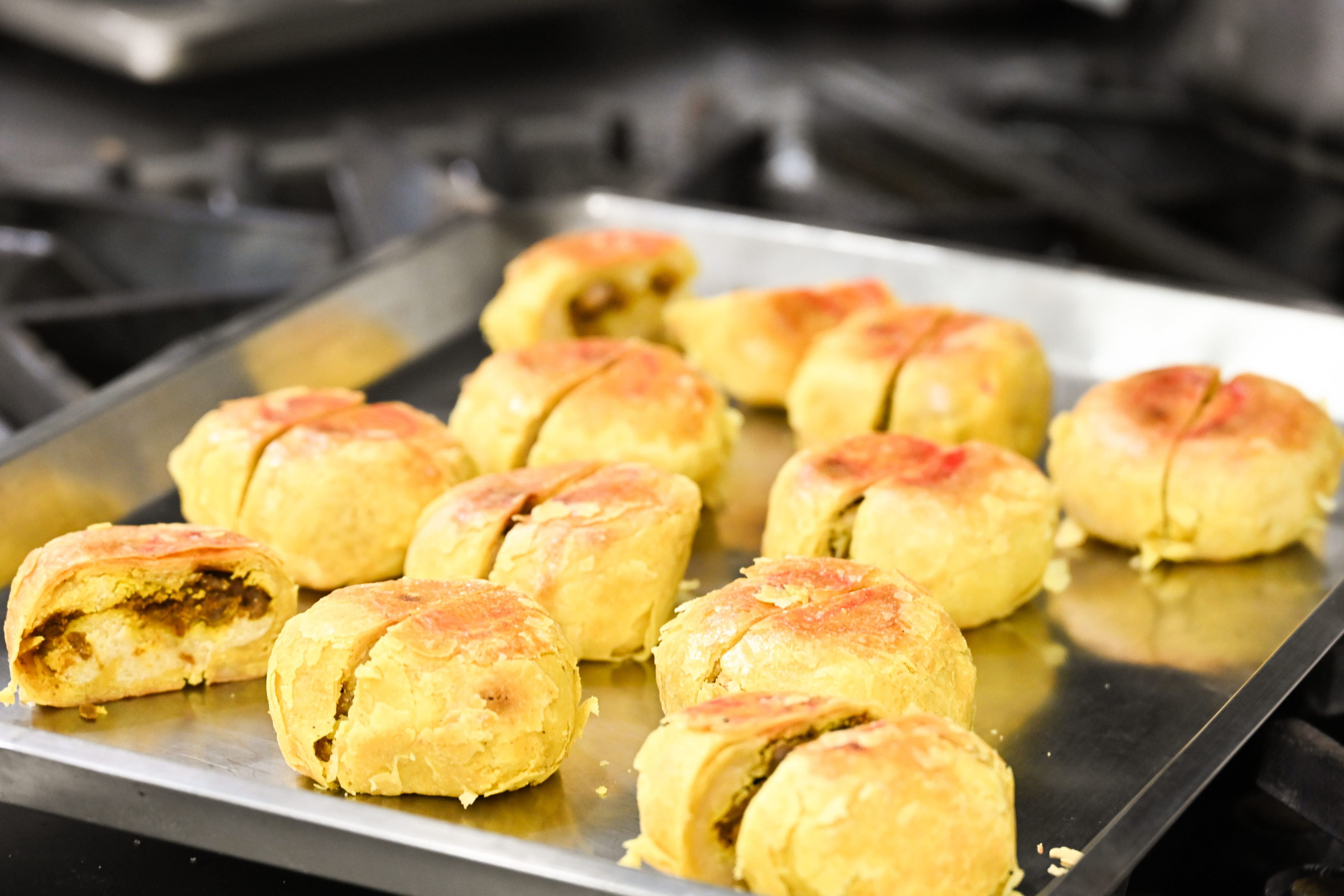
It’s all about that sweet and savory balance! Exploring classic Taiwanese mooncake flavors through mung bean cakes and egg yolk pastries.
Now that we understand the history of mooncakes, let’s dive into what makes Taiwanese mooncakes so unique.
The lineage of Taiwanese mooncakes can generally be traced back to "Suzhou-style" and "Cantonese-style" mooncakes. Suzhou-style mooncakes are made by preparing a water-based dough and an oil-based dough separately, then wrapping, rolling, and folding them to separate the layers with fat, creating a distinct flaky texture after baking. Depending on the cross-section and wrapping method, they are divided into "open-crust" and "closed-crust" styles. Open-crust pastries reveal their layers on the surface, looking like a roll of toilet paper from the side, while closed-crust pastries have flat, stacked layers that only reveal their thin, sheet-like structure when bitten into, much like a box of facial tissues.
Cantonese-style mooncakes, on the other hand, use a syrup-based dough made with oil, flour, and alkaline water. The crust is thin and intact, designed to hold a generous, rich, and dense filling. In the past, major hotels and traditional bakeries in Taiwan often used lotus seed paste, date paste, red bean paste, mixed nuts, and salted egg yolks for these mooncakes, serving them in small slices with tea. Even though their market share has declined, they remain a staple for high-end gifting, with many hotels still featuring traditional Cantonese or custard lava mooncakes as their signature items.
However, Taiwanese-style mooncakes are more than just a mix of Suzhou and Cantonese styles; they incorporate the unique characteristics of various eras in Taiwan. Overall, they are based on the crust techniques of Suzhou-style mooncakes, but their flavors often combine sweet and savory notes. Classic examples include mung bean cakes (lüdou peng) and egg yolk pastries. Famous shops like Xue Hua Zhai and Li Chi learned wagashi techniques from the Japanese, shrinking the size of their mooncakes and filling them with delicate mung bean paste and braised pork.
In 1925, Lu Shui, the founder of Xue Hua Zhai, won a bronze medal at a Taiwanese pastry exhibition, cementing the mung bean cake's status as a representative Mid-Autumn treat. The egg yolk pastry originated in 1975, when Chen Tseng-hsiung of the century-old Pao Chuan Bakery was inspired by "top scholar cakes" and small mooncakes. He reduced the size and used a water-oil dough with an oil-based pastry to create a thousand-layer crust, wrapping it around red bean paste and a whole salted egg yolk—the basic form of the modern egg yolk pastry. Today, influenced by pastry chefs like Chen Yao-hsun and Li Yi-hsi, the use of European butter, Japanese flour, and French lamination techniques has significantly enhanced their refinement, making the egg yolk pastry the undisputed king of contemporary Taiwanese Mid-Autumn mooncakes.
Savor your mooncakes with a good cup of tea and become a true Mid-Autumn connoisseur.
On August 11, 2026, T/ABLE Taiwan Flavor Studies invited food researcher Yen Chen-yu to host a lecture on "Mid-Autumn Culture and Traditional Taiwanese Pastries," which included a live mooncake tasting session.
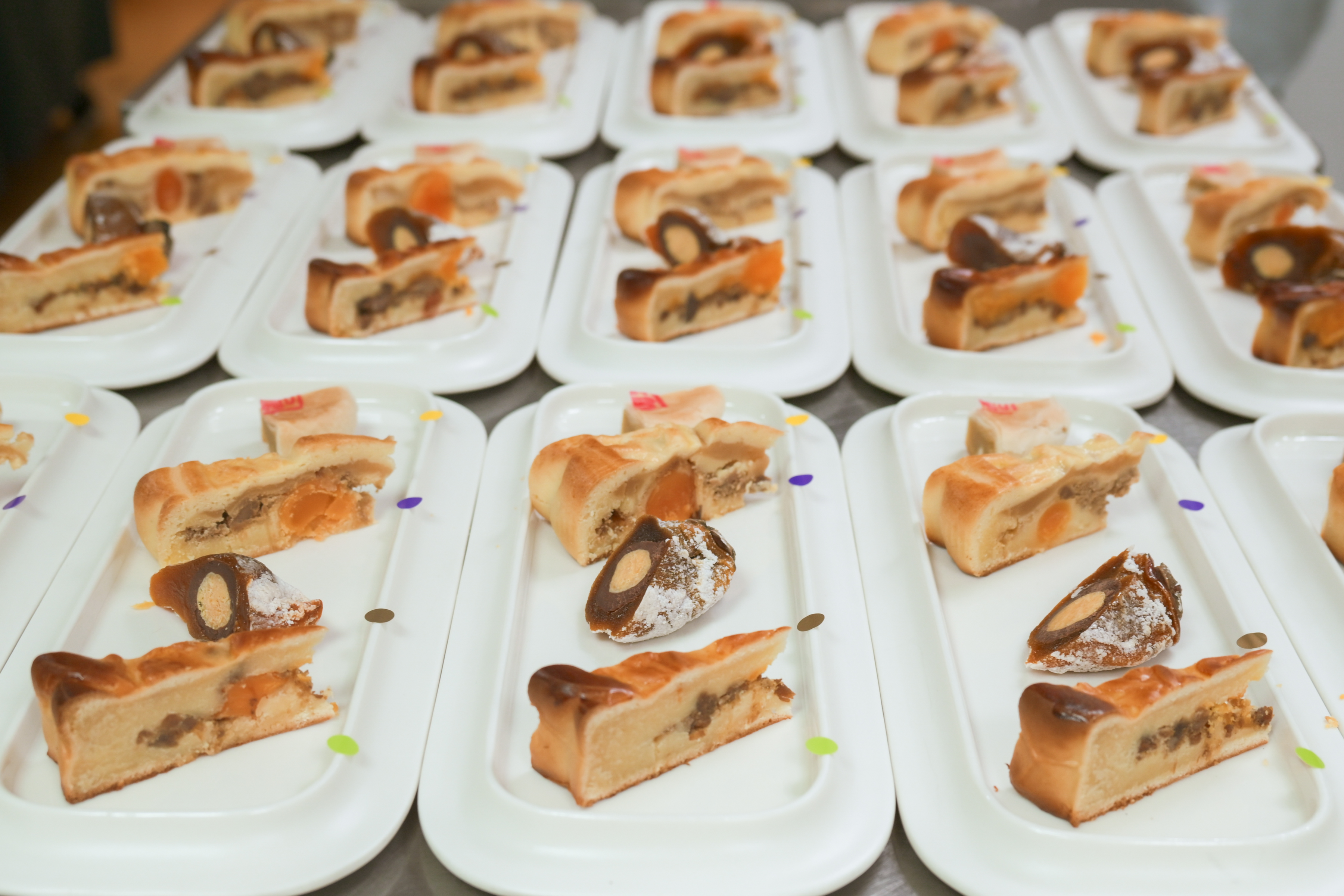
Evaluation Criteria
- Examine the appearance and cross-section:Observe whether the egg yolk pastry has a golden, glossy crust, and check for the distinct layers of the water-oil dough and oil-based pastry when cut. Also, note that a high-quality salted egg yolk should be oily and free of white spots.
- Inhale the aroma:Take in the scent of the butter or lard from the baked crust, as well as the fragrance of the bean paste and egg yolk filling.
- Taste the texture:Evaluate whether the crust is flaky and light, if the bean paste is smooth and dense, and experience the balance between the sandy, savory salted egg yolk and the sweetness of the filling.
However, Taiwanese people rarely eat mooncakes on their own; instead, they have developed a tradition of "pairing cakes with tea." It is now popular to pair them with representative Taiwanese teas like Tieguanyin or Oriental Beauty, or even specialty coffee, which effectively cuts through the richness and elevates the overall flavor profile. Below are six representative Taiwanese mooncakes that you might consider for your tea-pairing experience this Mid-Autumn Festival:
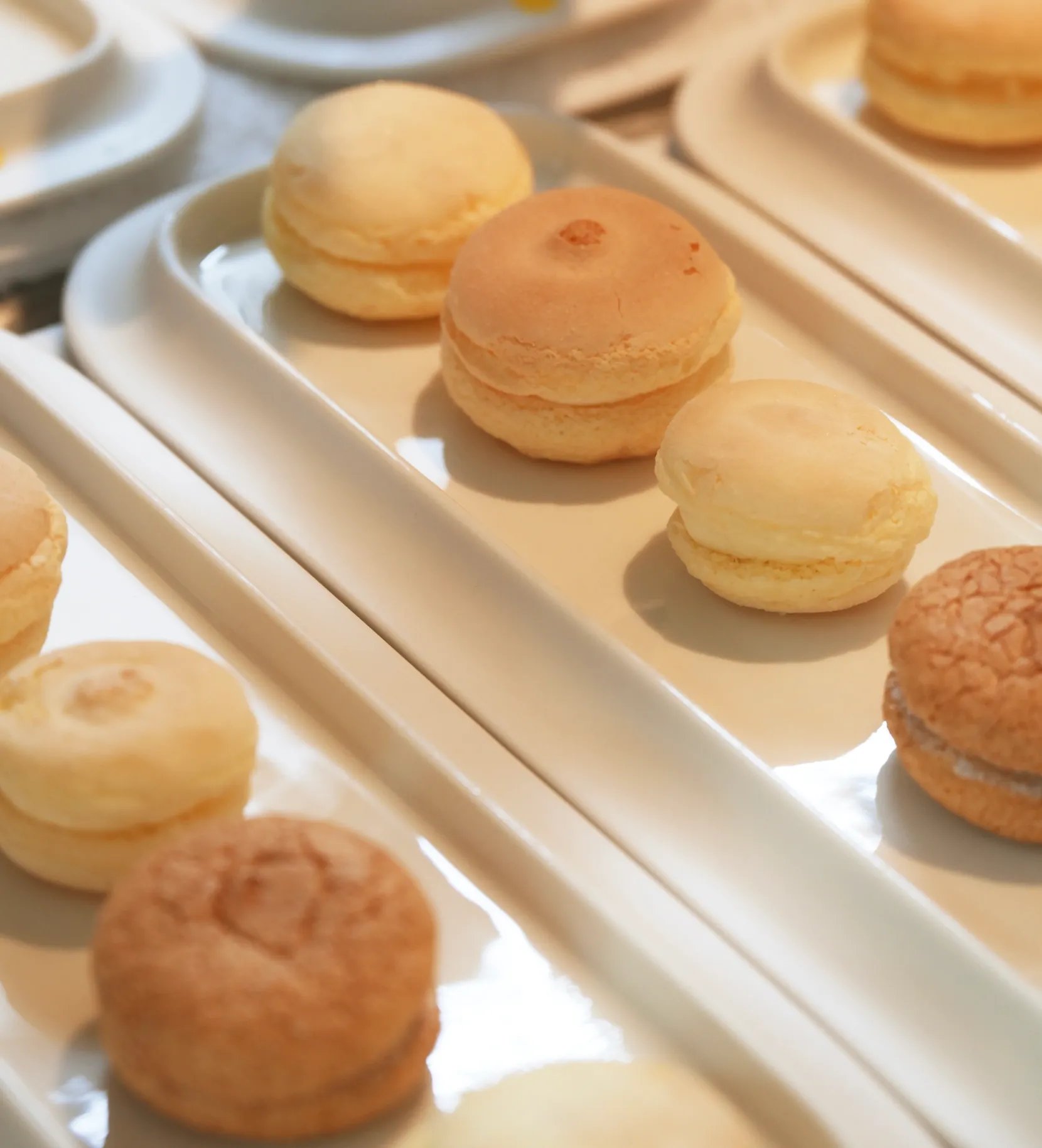
- Xue Hua Zhai:A landmark bakery in Fengyuan, a hub for traditional pastries. Founder Lu Shui won a bronze medal at the 1925 Taiwan Pastry Exhibition. Like Liji, they were pioneers who learned Japanese wagashi techniques during the colonial era, refining them into smaller, more delicate portions and establishing the mung bean pastry (ludoupeng) as the quintessential Taiwanese Mid-Autumn treat. Its signature features are a plump, white appearance and a slightly rustic, pinched base.
- Liji:Along with Xuehuazhai, Liji is part of the original lineage of mung bean pastries. Their mung bean and braised pork filling is encased in a firm crust that offers a distinct, flaky texture with every bite, often retaining a slightly crisp base—a classic example of traditional Taiwanese pastry-making techniques.
- Hong Ruizhen:A long-standing bakery in Beidou, Changhua. The crust of their mung bean and braised pork pastry is soft, blending seamlessly with the mung bean paste for a gentle, sweet finish. Tasting it alongside Shekou Liji provides the perfect comparison to appreciate the stylistic differences in Taiwanese mung bean pastry crusts.
- Jiamei:Their "Scholar Cake" (Zhuangyuan Bing) features a blend of mung bean and white bean paste, enriched with braised sauce and salted egg yolk. It has a higher moisture content, resulting in a soft, tender crust.
- Beigang Scholar Cake:The survival of the "Dragon and Phoenix" and "Scholar" cakes in Beigang and Lukang is closely tied to the "pilgrimage economy." These cakes are stamped with images of a scholar parading through the streets, symbolizing a triumphant return home.
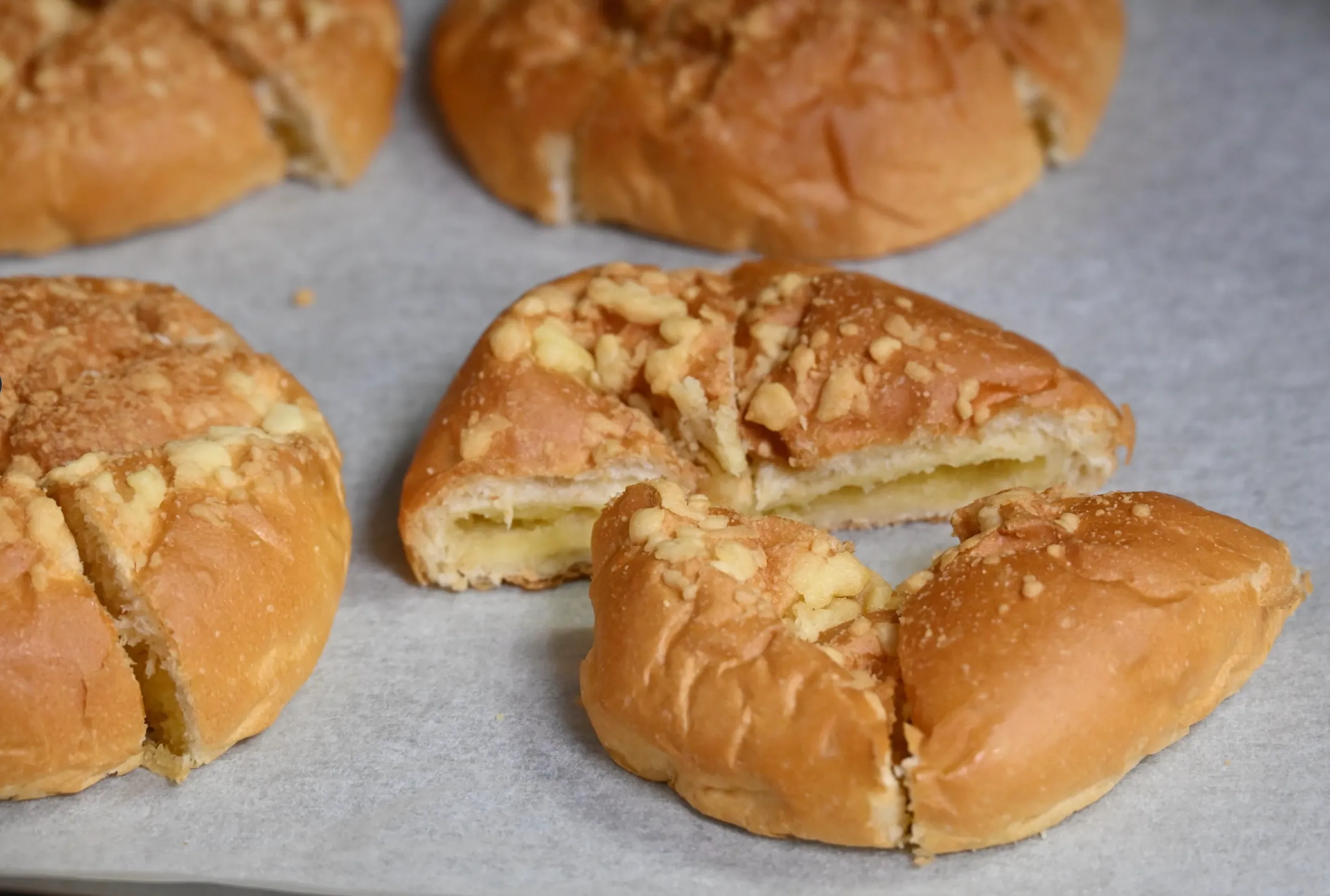
- Daxin Bakery:Keelung curry pastries possess a strong regional identity. The crusts vary across the city's seven districts; while traditional Chinese pastry crusts are common in the old downtown area, newer versions have emerged in other districts, sometimes resembling Western-style bakery creations.
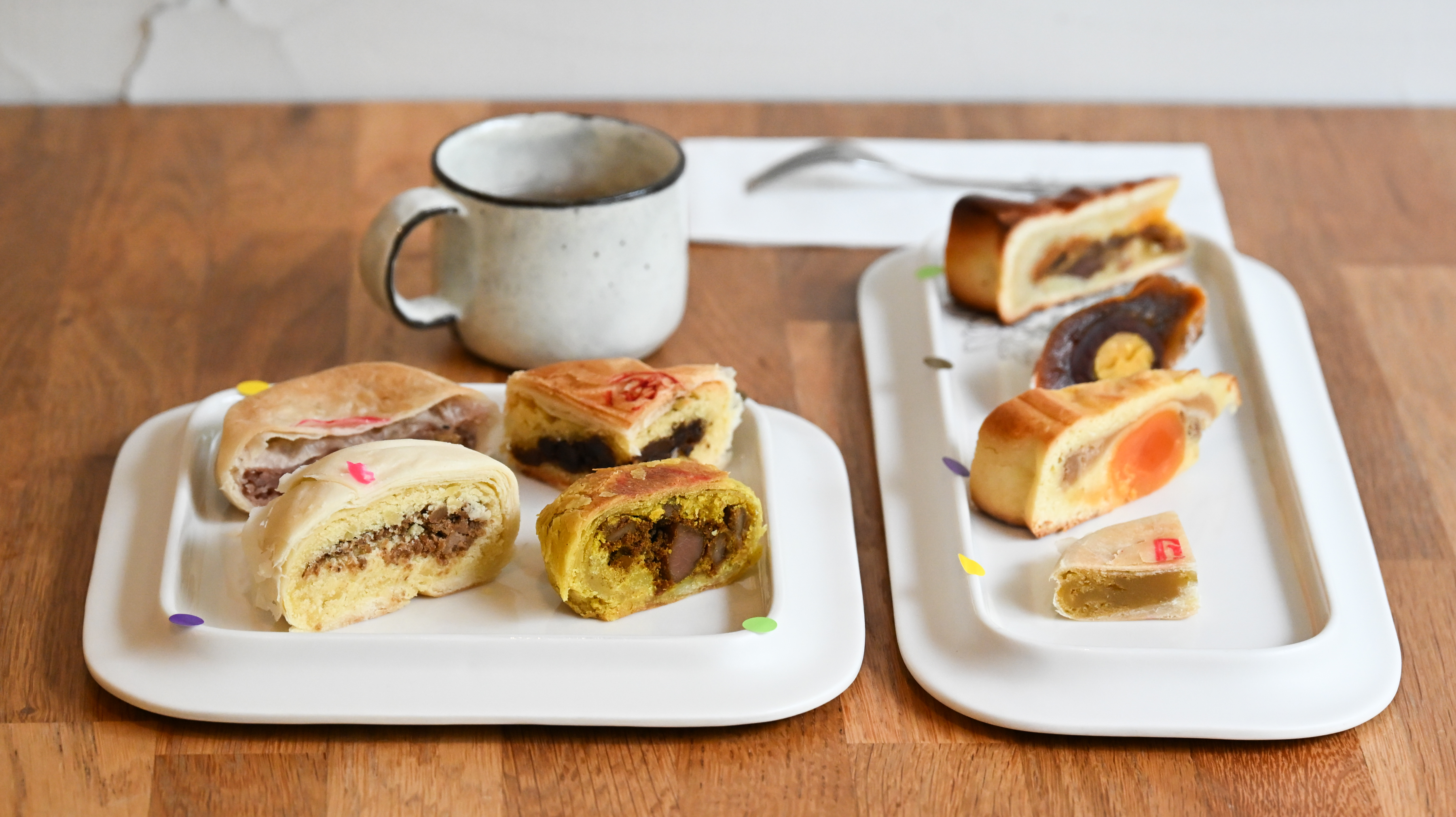
From sacrificial offerings to popular souvenirs, Taiwanese mooncakes have evolved over time, constantly developing flavors that reflect the spirit of the era and the local landscape. Even for the same type of mooncake, the fats used have shifted from lard and shortening to butter, not only changing the aroma and texture but also reflecting the availability of ingredients, storage needs, and changing dietary preferences of different generations. This Mid-Autumn Festival, as you look at the boxes of mooncakes on your table, why not move the conversation beyond "which egg yolk pastry is the hardest to buy this year"? Take a moment to observe their appearance, inhale their aroma, and savor their texture—and discover how, layer by layer, mooncakes have evolved into the contemporary face of Taiwan.
This article was compiled and edited based on transcripts and summaries from the T/ABLE food culture lecture series, as well as the researcher's field notes. All brand information is accurate as of the original source material.
Content Editor: Guo Hui
Reviewed by Hsu Chung, Yen Chen-yu
Photography: The One