Red Bean Bun: From Colonial-Era Introduction to Postwar Reinvention—and an Uncertain Future
Red bean buns, along with pineapple buns, scallion buns, and butter buns, are arguably the "four heavenly kings" of Taiwanese-style bread. Although they are an inseparable part of daily life in Taiwan, there is a lack of established vocabulary for evaluating them. How did this bread, which arrived from Japan and underwent post-war ingredient substitutions and industrial supply chain restructuring, come to be? Why does it look the way it does today? And what are the differences between Taiwanese and Japanese red bean buns? We aim to establish a clear, evidence-based language so that the red bean bun can finally be truly understood.
Rooted in Japanese tradition, yet grown into its own in Taiwan
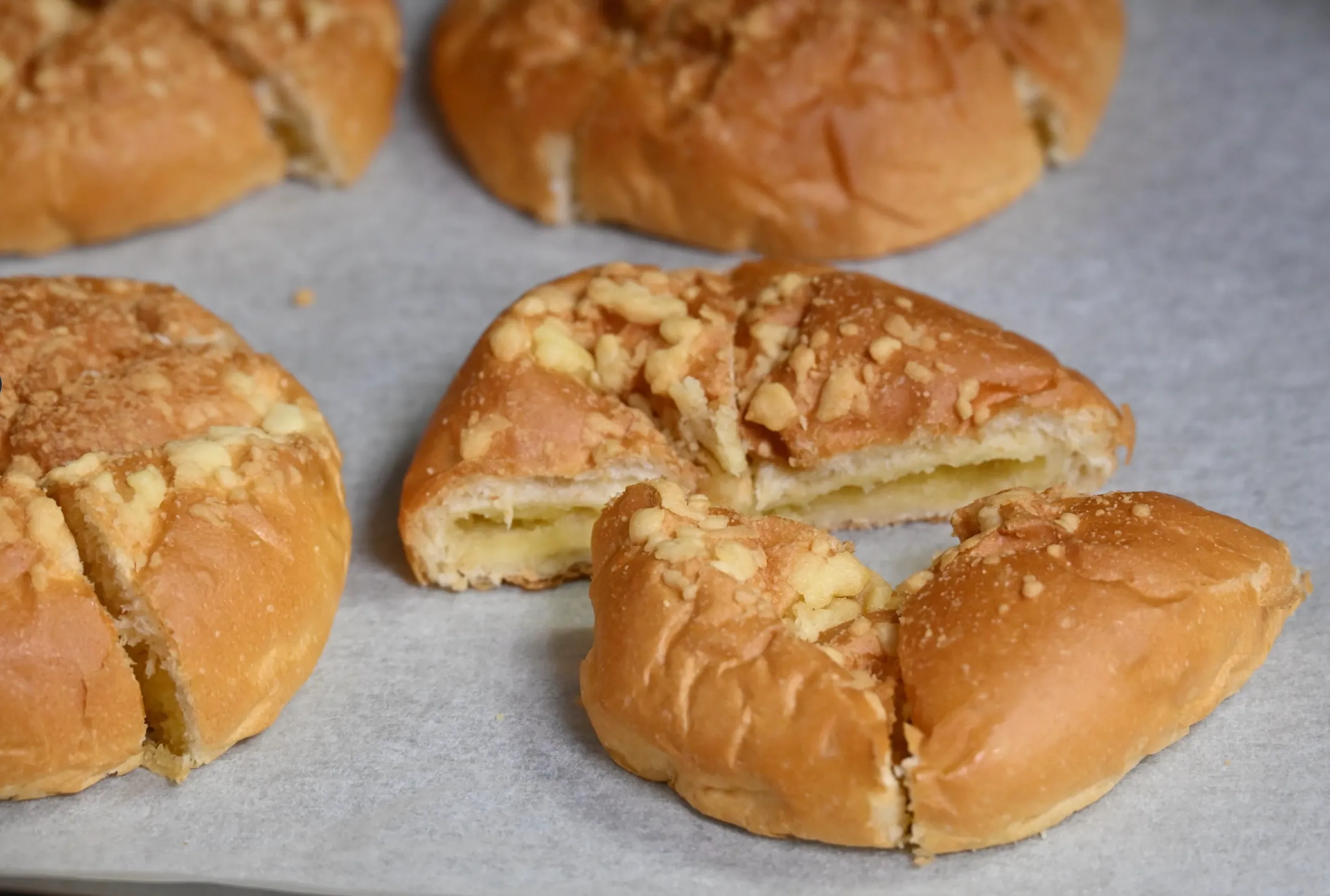
On the display shelves of bakeries, rows of dark brown, round buns sit with black sesame seeds dotted in the center. The moment you take a bite, the bread is fluffy yet chewy, with sweet bean paste appearing in the middle—a sweet treat that many remember from after school or during a busy workday. Its history can be traced back to the Japanese colonial period (1895–1945), when Japanese bread-making techniques and the use of yeast were introduced, laying the foundation for Taiwan's baking industry. The *anpan* (red bean bun) made with sake-yeast fermentation by Kimuraya Sohonten can be considered the direct ancestor of the Taiwanese version. However, at that time, bread was still a relative luxury and not a daily staple.
After the Nationalist government relocated to Taiwan, baking techniques from various Chinese provinces converged on the island. From the 1950s, the influx of American aid flour allowed bread to reach a broader market. During this period, the red bean bun began to evolve from its Japanese form into a Taiwanese one, where the ratio of bean paste to bread decreased, prioritizing "satiety" as the primary consumer logic. With the development of food processing technology, an industrial supply chain for pre-made bean paste gradually took shape. In terms of fats, the early use of lard was largely replaced by shortening for better shelf stability, while salad oil became widely used in bean paste production to extend its shelf life.
This supply chain structure directly shaped the mainstream flavor profile of today's Taiwanese red bean bun. More specifically, the fundamental difference between the Taiwanese and Japanese versions lies in the philosophy of the bean-to-dough ratio and the influence of the industrial supply chain. The Japanese version is typically smaller, with a thin crust and generous filling, emphasizing the presence of the beans. Historically, the Taiwanese version has favored more bread and less bean, focusing on satiety rather than the refined expression of the bean flavor.
Understanding the two keys to red bean bun production: fermentation and bean paste
From a production standpoint, making a red bean bun can be broken down into two main axes: the fermentation process of the dough and the philosophy of cooking the bean paste. Regarding the fermentation process, most Taiwanese red bean buns use the sponge-dough method, which involves two stages of fermentation. The "sponge-dough method" involves mixing a portion of the flour and water to create a "sponge" that undergoes an initial fermentation, before adding the remaining ingredients and mixing for a second fermentation, resulting in a softer texture. This method produces a larger volume, a fluffier structure, and better moisture retention. For the same weight, the sponge-dough method yields a significantly larger bun than the direct method—a practical choice for a mass-market product that needs to "look like it's worth the price."
During fermentation, the choice of flour also affects texture and aroma; higher protein content leads to a chewier bite, while mineral content influences the aroma. The black sesame seeds on the surface, originally a decorative element from Japanese techniques, have now become a signature identifier. The color of the crust serves as an indicator of doneness; bread that is too pale is often under-baked, which is a common cause of bloating. As for the "tangzhong" (water roux) method often seen on the market, which involves gelatinizing a portion of the flour with hot water above 65°C to increase water absorption and improve melt-in-the-mouth texture, it is a technique rather than a fermentation method and will not be discussed further here.
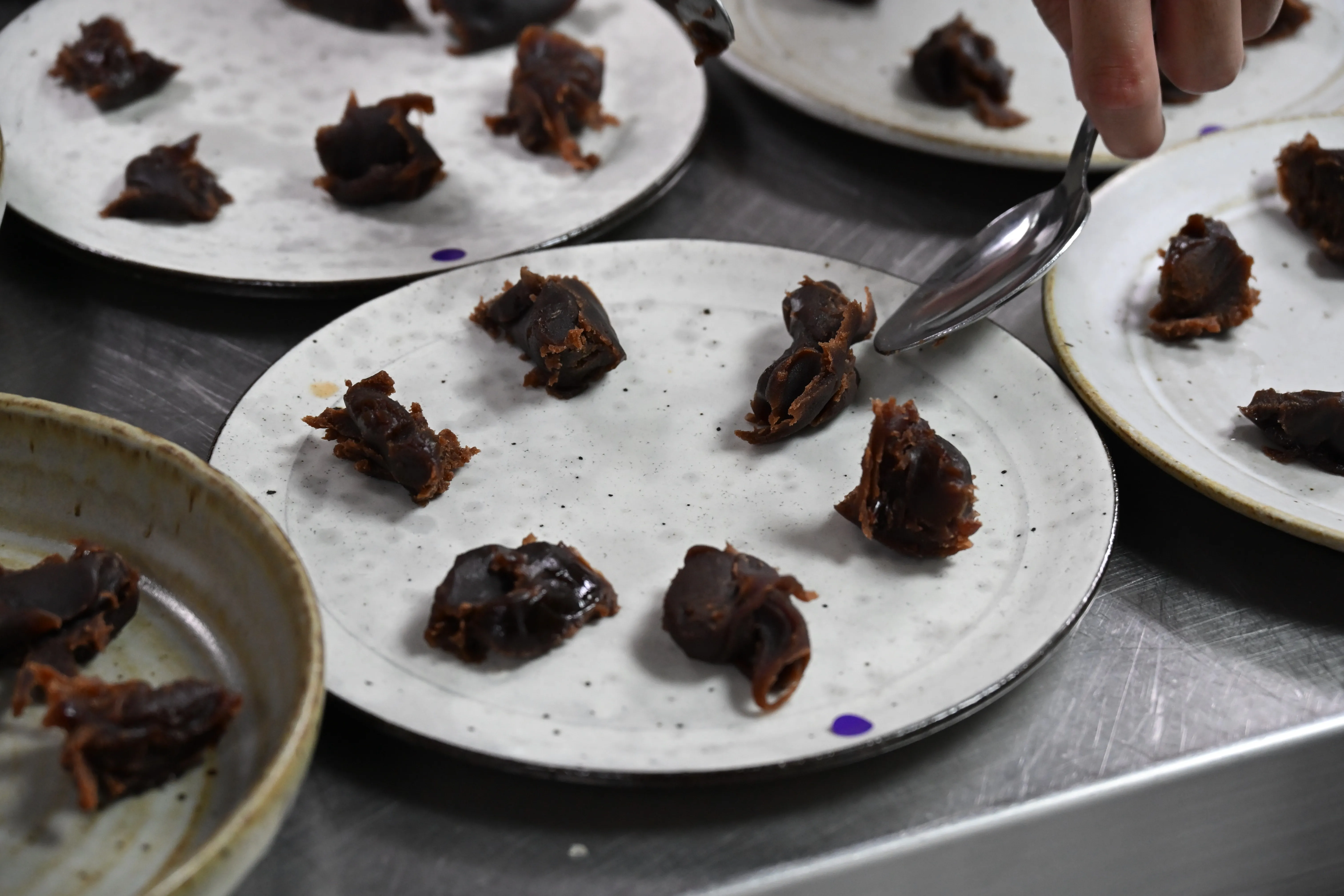
Regarding the "philosophy of cooking the bean paste," the filling generally falls into two categories. The first is "smooth bean paste" (wudousha), which is silky with no visible particles, offering a delicate texture that is uniform but lacks complexity; this is the mainstream choice for large-scale pre-made fillings and is used by most chain bakeries. The second is a chunky bean paste, which retains semi-intact beans within the paste base, providing both bean flavor and texture. This requires the highest level of cooking skill, involving slow simmering over low heat, and is more common in artisanal bakeries.
It is worth noting that the choice of sugar affects how well the bean aroma develops; brown sugar usually brings out the red bean flavor better than pure white sugar. In terms of fat, bean paste without added oil has a direct bean flavor but a drier texture; adding butter makes it rich and smooth, enhancing the aroma, though it may partially mask the bean flavor. Whether or not to add fat is a subjective choice for the baker.
Exploring the diverse possibilities of the red bean bun through the artisan's craft and reflection
In Taiwan, the red bean bun was once a snack in a schoolbag after class, the most humble option on a breakfast shop shelf, or that bag you grabbed on your way home on a scooter. It is not a festive food, nor a gift-giving choice, but something that fills your stomach on an ordinary day without needing a reason. This everyday nature is both the reason it is rarely studied seriously and the reason it deserves to be treated with care.
Evaluation Criteria
- Bread Structure/ Crust color depth, dough elasticity, bean paste smoothness, particle consistency, melt-in-the-mouth speed
- Aroma/ Strength of wheat base notes, bean paste sweetness, fermented sake aroma, buttery milk aroma
- Filling Texture/ Layers of sweetness, richness, depth of bean flavor, length of aftertaste
- Sweetness Level/ Complexity of bean paste flavor
- Overall Impression/ Balance between bread and bean paste, brand identity, and likelihood of repurchase
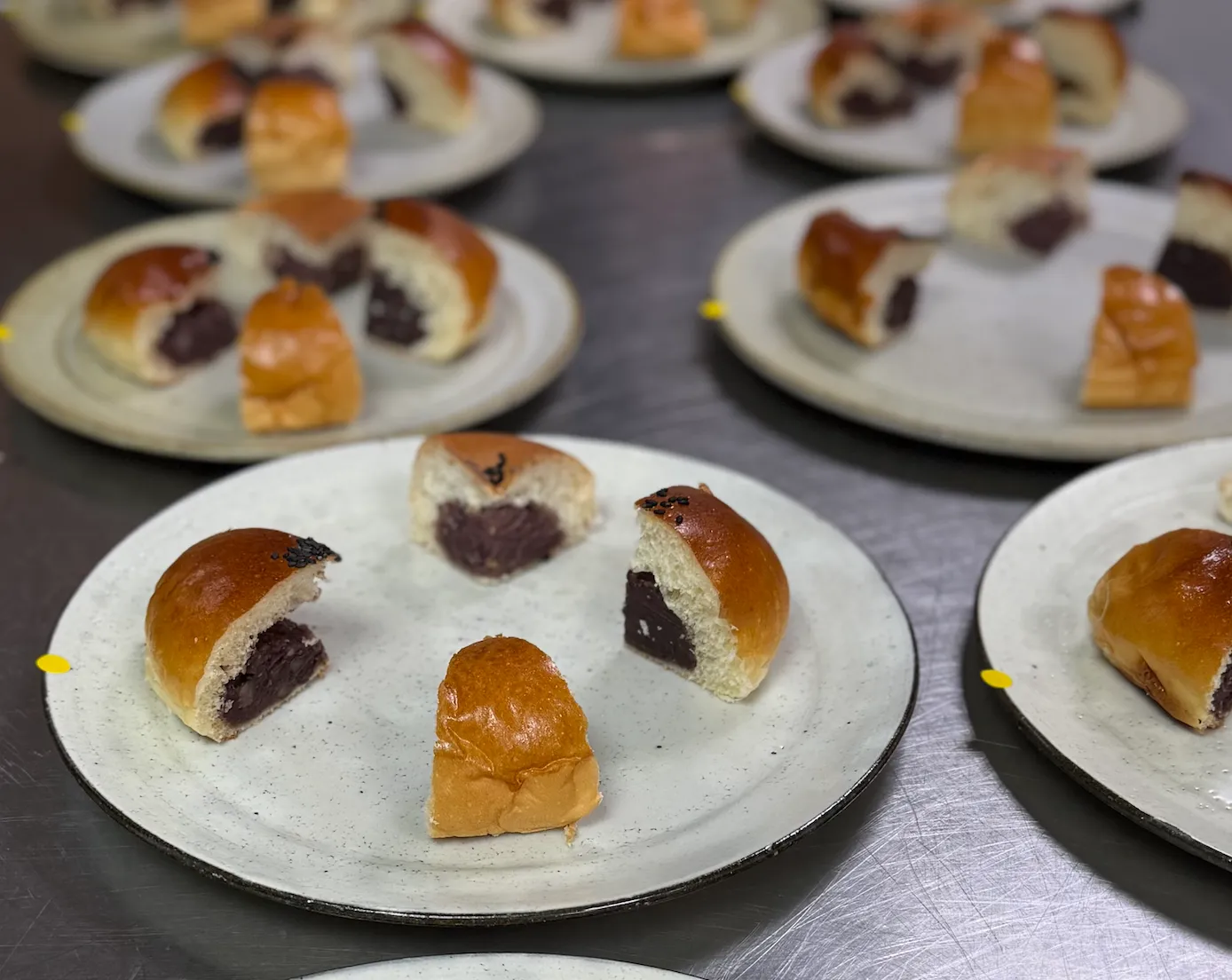
In May 2026, T/ABLE hosted a "Red Bean Bread Journey" workshop, inviting Chen Hong-wei, owner of the Taichung bakery Mian Bao Lin Li, to lead a tasting session. Participants sampled a variety of red bean breads, including artisanal, traditional Taiwanese, Japanese-style, sake-yeast, and night market versions. The evaluation form covered five key dimensions: bread structure, aroma, filling texture, sweetness, and overall impression. The discussion focused on the flavor differences between red bean varieties (Kaohsiung No. 8 and No. 9), the logic behind choosing between sponge-dough and straight-dough methods, and the subjective decision of whether to add fat to the bean paste.
- Traditional Taipei Bakery:Sponge-dough bread with a bean paste that has a subtle malt undertone, representing the quintessential Taiwanese-style bread.
- Innovative Taipei Brand:Presented in a petite size similar to wagashi and topped with a chestnut, the dough leans toward a brioche ratio. By prioritizing egg aroma over bean notes, this represents one of the most ambitious directions in the contemporary evolution of red bean bread.
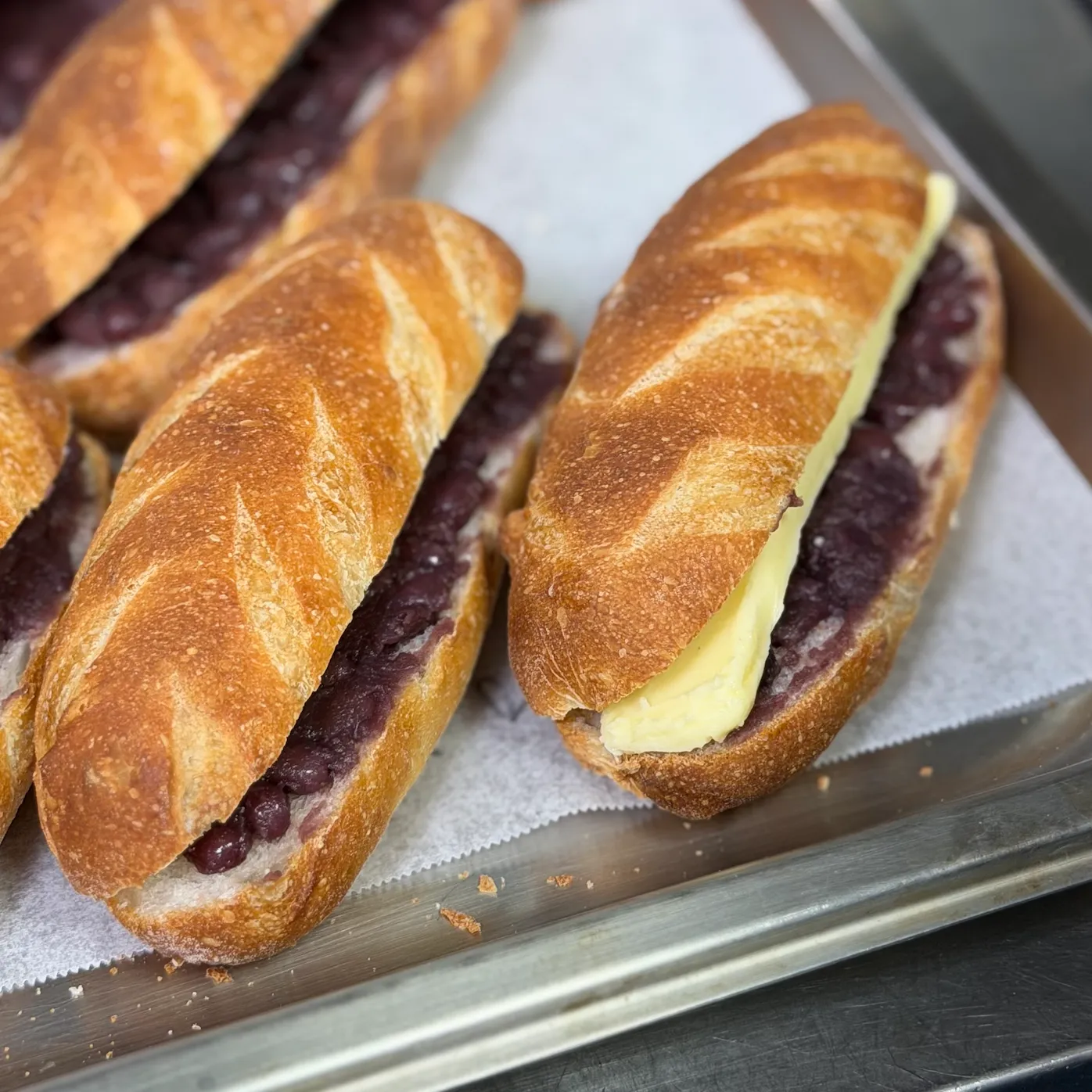
- Contemporary Taichung Artisan Brand:Uses hand-picked, sustainably grown red beans, cooked in-house. They currently offer two versions: Kaohsiung No. 9, which has larger grains and cooks quickly, and Kaohsiung No. 8, which has smaller grains, a richer aroma, and requires a longer cooking time. These are paired with stone-oven sourdough bread filled with French Montaigu butter.
- Classic Japanese Brand:The bean paste uses a higher proportion of starch syrup, resulting in a distinct elasticity and a sticky mouthfeel, which also extends shelf life. This represents the stable form of Japanese mass-production baking techniques adapted in Taiwan, favoring an industrial, clean sweetness over the nuanced aroma of the beans themselves.
- Specialty Japanese Brand:A Japanese-style red bean bread made with brandy-infused yeast. It has a noticeable aroma of spirits upon the first bite, with a soft bean paste and a light, airy bread structure, likely achieved through the sponge-dough method.
- Night Market Version:The crust is glossy, the bean skins are clearly visible in the cross-section, the sweetness is direct, and the bread is soft. This represents the most primal, grassroots form of red bean bread, maintaining its place in daily life through an accessible price point and a highly recognizable appearance.
The Two Paths of Red Bean Bread Amidst Climate Risk
Looking at the development of red bean bread across different eras and regions, Japan’s anpan centers on the presence of the bean, preserving diverse fermentation options; the tradition of slow-cooking bean paste in copper pots requires immense skill and precise heat control. In contrast, Taiwan’s mass-production model focuses on economies of scale, ensuring that a consistent loaf can be found on every street corner at an affordable price.
In the modern era, a small group of Taiwanese bakers has begun to explore the nuances of variety and terroir. Can the aroma of Kaohsiung No. 8 be distinguished from the fullness of No. 9 in the filling? Does the soil difference between Pingtung’s Wantan and Kaohsiung’s Daliao for the same variety ultimately manifest in a single bite of paste? Meanwhile, some bakers have started using whole wheat flour milled from locally grown Taiwanese wheat, discovering that improvements in freshness and milling technology allow it to rival flour imported from Europe and Japan.
Looking ahead, the most immediate threat to red bean cultivation in Taiwan is climate risk. Over the past two years, consecutive typhoons have caused total crop failures for some farmers. Sustainable farming, which rejects the use of defoliants, requires manual harvesting, making costs three to four times higher than conventional methods. Without enough consumers willing to pay for the differences in variety and farming practices, the survival of this supply chain will long depend on the personal relationships between a handful of bakers and farmers.
It is clear that this sweet, round loaf stands at a crossroads. On one side, it continues to be the everyday bread that provides satiety—cheap, consistent, and requiring no justification. On the other, it is a bread that invites us to think a little more about the variety of the bean, the choices of the farmer, and the logic of the fermentation. These two directions are not mutually exclusive, but they require entirely different types of consumers to support them. As for you, the next time you pick up that dark brown bun, what do you want it to be?
This article was compiled and edited based on transcripts and summaries from the T/ABLE food culture lecture series, as well as the researcher's field notes. All brand information is accurate as of the original source material.
Content Editor: Guo Hui
Reviewed by Xu Zhong, Yang Zhiwei
Photography: The One